Tryon Edwards Quotes
If you would thoroughly know anything, teach it to others.
Edwards, Tryon. A Dictionary of Thoughts. Cassell Publishing Company, 1891, p. 556.


This principle characterized most Islamic cultures for the next 400 years while Christian Europe was in the Dark Ages and had ignored most of the accumulated Western knowledge of the Greeks and Romans, The Muslims however, kept this knowledge alive and added to it supporting great mathematicians, scientists, philosophers, theologians and physicians. During the 12th century extreme fundamentalists gained control over Islam and this great principle of Umar’s was not only ignored but those who acquired new knowledge were persecuted as “innovators” often a capital crime. When Christian Europe began to rise intellectually, the Muslim societies were declining. Even today, the Islamic cultures are split as to the value of new knowledge and while there are modern Muslim scholars and scientists, there are still major forces throughout Islam who consider knowledge that is not in the Koran or which contradicts the Koran not only false, but heretical, often to be punished even by death.


There was the beginning of a major debate in the advanced countries over the notion of copyright to protect authors and knowledge being a public property. The solution for America and most nations was to allow copyright protection for the specific expression of the knowledge but not the knowledge itself. You cannot copyright an idea or the laws of science—just the way they are expressed. Therefore all are free to discuss the knowledge and also write about it.


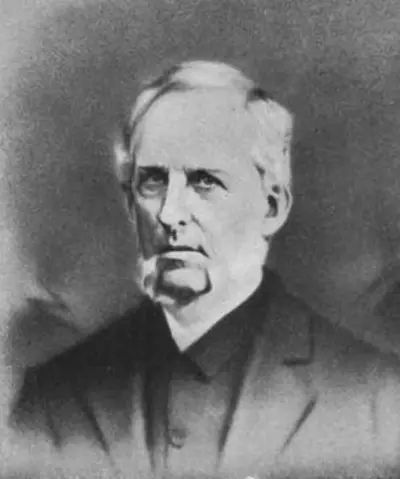
Tryon Edwards was an American theologian, minister of the Second Congregational Church in New London, Connecticut, from 1845-1857, after having served in Rochester, New York. He was best known for his collection of quotations, A Dictionary of Thoughts, a book of quotations, for his compilation of the sixteen sermons of his great grandfather, Jonathan Edwards, on 1 Corinthians 13 as Charity And Its Fruits; Christian love as manifested in the heart and life, and for his edition of the works of his grandfather, Jonathan Edwards (the younger) (in 1842).
