Marquis de Lafayette Quotes
If the liberties of the American people are ever destroyed, they will fall by the hands of the clergy.


Said was commenting on the furor that developed in 1989 when Iran Ayatollah Khomeini issued a Muslim legal opinion—a fatwa--calling for the death of, and offered a bounty on, Salman Rushdie whose book, Satanic Verses, contained material to which they objected as blasphemy:


Commenting on the so called radical religious right:

Ironically, without the word “wicked” most people would regard the first sentence as a good description of elements of a modern democracy. It illustrates that for the Islamic fundamentalist democracy substitutes the rule of man for the rule of God, freedom of speech allows heresy and blasphemy to to uttered and communicated, and religion which is supposed to inform and direct politics. So what is good for the lover of democracy is the very thing that is bad for Islam. This is not a uniquely Islamic viewpoint. It has been and is held by fundamentalist Christians and Jews as well who would return to Biblical law punishing blasphemy and heresy with death and have religion drive all politics.

Spinoza’s ideas were considered so radical and dangerous that he was the only man in history who was excommunicated by the Catholics, the Jews and the Muslims. This was his observation after his first excommunications -- by his Jewish Congregation in Amsterdam.


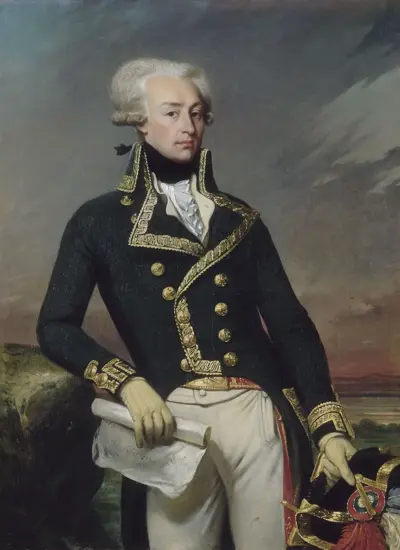
Marie-Joseph Paul Yves Roch Gilbert du Motier, Marquis de La Fayette, known in the United States as Lafayette (/ˌlɑːfiːˈɛt, ˌlæf-/, French: [lafajɛt]), was a French aristocrat and military officer who fought in the American Revolutionary War, commanding American troops in several battles, including the siege of Yorktown. After returning to France, he was a key figure in the French Revolution of 1789 and the July Revolution of 1830. He has been considered a national hero in both countries.
