James Joyce Quotes
If the Irish programme did not insist on the Irish language I suppose I could call myself a nationalist. As it is, I am content torecognize myself an exile: and, prophetically, a repudiated one.
Joyce, James. Letters of James Joyce. Edited by Richard Ellmann, vol. 2, Viking Press, 1966, p. 187.


After the WWI Turkish massacre of Armenians and the casualties of WWII, large numbers of Armenians were outside of Armenia which was a part of the Soviet Union and many ethnic Russians were moved into Armenia thus dominating the country. The ethnic Armenians found themselves a minority in their own homeland,


It is quite extraordinary how many world class scientists were born and brought up in Hungary. If one normalized the Nobel Prize winners per 10 million citizens, Hungary has more Nobel Laureates than any other country including the United States, England, Germany or France. Ironically, most of them were born and brought up in Hungary, but did most of their scientific work in another country—typically the 4 mentioned above.

See {640102} for his view of the relationship between territory and nationality and {640100} for his definition of a nation which is what most people use.

He was speaking metaphorically here. Literally dreaming in English is not his requirement. What is required is an outlook, perception, value system, and national identity that is American. Lack of English language proficiency makes that much harder to achieve.


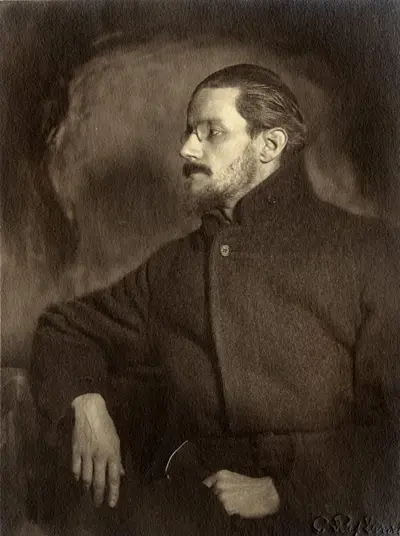
James Augustine Aloysius Joyce was an Irish novelist, short story writer, poet, teacher, and literary critic. He contributed to the modernist avant-garde movement and is regarded as one of the most influential and important writers of the 20th century. Joyce is best known for Ulysses (1922), a landmark work in which the episodes of Homer's Odyssey are paralleled in a variety of literary styles, most famously stream of consciousness. Other well-known works are the short-story collection Dubliners (1914), and the novels A Portrait of the Artist as a Young Man (1916) and Finnegans Wake (1939). His other writings include three books of poetry, a play, his published letters and occasional journalism.
