Amy Chua Quotes
If the history of hyperpowers has shown anything, it is the danger of xenophobic backlash. Time and again, past world-dominant powers have fallen precisely when their core groups turned intolerant, reasserting their ‘true’ and ‘pure’ identity and adopting exclusionary policies towards ‘unassimilable’ groups.
Amy L. Chua, Political Scientist, Day of Empire: How Hyperpowers Rise to Global Dominance—and Why They Fall, 2008
Sourced by: Eigen's Political and Historical Quotations


Describing the ethnic immigration quotas that Congress was debating in 1924:


He was agreeing with the Right Wing racist Dutch politician Geert Wilders that one of the dangers of immigration of different races and ethnicities is that their children would not be capable or able to contribute to America or in his view make America Great Again as it has been diminished by all these immiogrant babies of the last few generations. There are very few areas of civilization where America is not greater today than ever before.


This quotation was a comment on the Donald Trump Ban on Muslim Travel to the US from 7 Islamic countries. Trump, when campaigning for the Presidency, was masterful in appealing to the nativist inclined people of both political parties. He had promised to ban all Muslims from entering the country. When he got elected, he issued an executive order banning Muslims from 7 countries from U.S. entry, There had been a substnatial number of Americans killed by Islamic Terrorists in 9-11 and other acts, and this was the rathional for the Muslim ban. However, of the Americans who had been killed or wounded by Muslim visitors, none of them had been killed by any from the 7 countries that were banned. Thousands had been killed by Islamic terrorists from Saudi Arabia, Egypt and Pakistan, Yet there was no ban on those coutnries. The problem did not exist in the countries that were banned. The Trump motive for this irrational Executive order has never been clear but many thought that he felt he had to look like he was keeping his campaign pledge, and since we did much business with the 3 nations from which the terrorists actually came, while the 7 counties he banned had little or no economic impact on the United States, Some critics ascribed the decision to the fact that Trump personally had substantial business ventures in all of the 3 countries that had produced and on many ways supported the terrorists, but he had no business interests in teh 7 countries upon which he placed the ban. Unlike otehr post 19th century Presidents, Trump refused to divest his ownership of his busineeses, and even refused to place them in a blind trust. A few days after the Executive Order was put into effect, a Federal Judge issues an injuunction to cease enforcing the order until the issue of unConstitutional religious discrimination could be heard. He ruled that there was irreparal harm and the Attorney General of Washinton State who filed the suit was likely to prevail.


This quotation shows that the racism and master race of Nazi Germany was a norm in Germany well before Adolf Hitler and the Nazis. It was an endemic part of the culture. This makes the German post WWII reforms all the more remarkable as the vast majority of an entire nation had to radically change its world and personal views and perceptions.

The great physicist was asked if he believed in extra-terrestrials. Fermi was the scientist who organized and planned the first controlled nuclear chain reaction


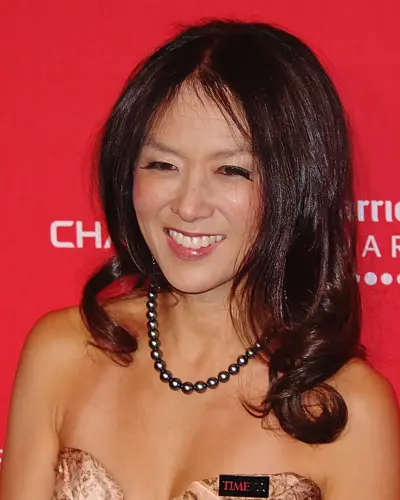
Amy Lynn Chua is an American law professor and writer. She is the John M. Duff Jr. Professor of Law at Yale Law School. Her expertise is in international business transactions, law and development, ethnic conflict, and globalization and the law. She joined the Yale faculty in 2001 after teaching at Duke Law School for seven years. Prior to starting her teaching career, she was a corporate law associate at Cleary, Gottlieb, Steen & Hamilton. She is also known for her parenting memoir Battle Hymn of the Tiger Mother. In 2011, she was named one of Time magazine's 100 most influential people, one of The Atlantic’s Brave Thinkers, and one of Foreign Policy’s Global Thinkers.
