Everard Digby Quotes
If I had thought that there had been the least sin in the plot, I would not have been of it for all the world; and no other cause drew me to hazard my fortune and life, but zeal to God's religion [Catholicism].
Religious zeal as a motive for terrorism has a long history.
Everard Digby, *, English Catholic Noble and Conspirator in the Gunpowder plot of 1605, Letter to his wife after he was condemned to death for his treason, 1605
Sourced by: Eigen's Political and Historical Quotations


It was not until 1780 that Catholics were allowed to even be members of Town Corporations.


This is the type of person who suicide bomber recruiters seek out.

Pascal was himself a very religious man, but observed this phenomenon about many religious people.


The Protestant Clergy issued similar statements. This was one of the few areas of agreement.


In April of 1689, Protestant William of Orange landed in England against Catholic King James I, in a Catholic-Protestant civil conflict which not only affected England but its colonies as well. The Governor and Lieutenant Governor of New York City were confused and wary as to taking immediate sides, but there was a strong anti-Catholic movement in New York City. This group, functioning as “The General Convention for the Province of New-York,” elected Leysler, its leader—later appointing him Lieutenant Governor of New York. Leysler’s forces seized the government and imprisoned the King James Appointed Officials who would not turn against James. Leysler actually governed New York for almost two years. The old guard of New York, after William had been crowned King, attempted to regain the status quo ante. Leysler and his extremist followers saw them as traitors and Papal supporters although they themselves were English Protestants. But their appointment, loyalty and wavering regarding James I made them traitors in the view of Leysler. When initial troops tried to regain power for the original governor and council Leysler, he simply dismissed them as Papists. Finally, in March of 1691 Governor Slaughter, arrived with more troops, and after a significant Battle for New York, captured Leysler and his major followers where were executed shortly thereafter. This incident, sometimes referred to as “Leysler's Rebellion,” represents these American “firsts.” First successful revolution in America; First military coup; First military dictator. First successful counter-revolution. There were some contemporary critics who thought Leysler as interested in custom duties as Papists.


Collins and his followers used terror tactics—the first major use in the 20th century.


The column was written in the immediate aftermath of the terrorist murder of hundreds of school children and adults in Russia. The newspaper was the largest Arab newspaper in the world.

Terrorism via bombing of innocent civilians was not an invention of the late 20th Century. England was coping with Irish and anarchistic terrorists in the 19th Century.
Terrorism even then put strains on traditional diplomacy where bombers would take sanctuary or raise money in countries whose diplomatic policy was opposed to terrorism of all types. At this particular time, Irish terrorists would raise money in the United States to support the terrorists bombing English targets.

Richard Southwell Bourke. Victoria was then Queen. The role of the Islamic religion in terms of violence, terrorism & rebellion is not uniquely a question of the 21st century. The 19th Century saw much Islamic fundamentalist violence in India and other Islamic Colonies—much more than from other religious groups in similar colonial status. Opinion was divided between those who saw Islam—especially the Wahabi sect—as inciting violence per se. Mayo assigned one of his administrators to do a study of the issue. See {616924} for the study of William Wilson Hunter. Ironically, Lord Mayo was stabbed to death in a terrorist attack on him personally in 1872.
motivates him as opposed to a plot He had entered the Catholic cathedral in Lisbon, and in the middle of the mass, wrested the host away from the bishop and trampled it on the ground. The Catholics thought that the Protestant English were about to launch a plot to establish a reformed church in Portugal. They arrested all Englishmen in Portugal. Finally, after much torture, the decision was reached that Gardener acted on his own, and he was roasted alive.

In this extraordinary act, the people who are persecuted are made to pay extra taxes to facilitate their persecution
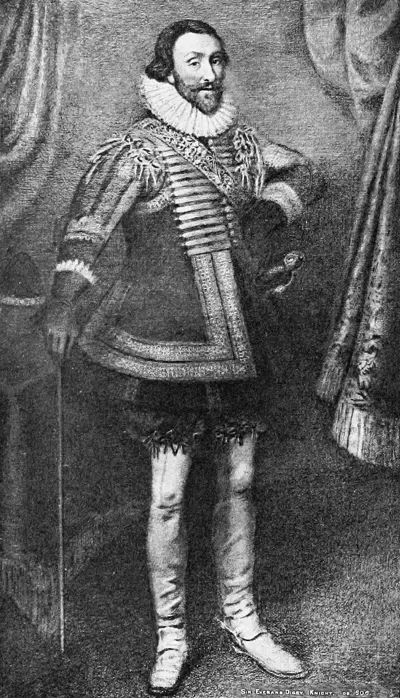
Sir Everard Digby was a member of the group of provincial English Catholics who planned the failed Gunpowder Plot of 1605. Although he was raised in a Protestant household, and married a Protestant, Digby and his wife were converted to Catholicism by the Jesuit priest John Gerard. In the autumn of 1605, he was part of a Catholic pilgrimage to the shrine of St Winefride's Well in Holywell. About this time he met Robert Catesby, a religious fanatic who planned to blow up the House of Lords with gunpowder, killing James I. Catesby then planned to incite a popular revolt, during which a Catholic monarch would be restored to the English throne.
