Louisiana Quotes
If any person shall use any language from the bar, bench, stage, pulpit, or in any other place, or hold any conversation having a tendency to promote discontent among free colored people, or insubordination among slaves, he may be imprisoned at hard labor not less than three nor more than twenty-one years; or he may suffer death, at the discretion of the Court
This law, though clearly unconstitutional by modern legal standards, was used by the abolitionists to illustrate that slavery, in addition to infringing on the freedom and rights of Negroes, also curtailed the rights of white people who could not even read certain Biblical passages from the pulpit if a Negro was present. Virginia and North Carolina had similar laws except that they were more liberal. The death penalty could only be meted out for a second offense.
Louisiana, Early 19th Century Law, Quoted in Goodell, The American Slave Code In Theory And Practice, 1853
Sourced by: Eigen's Political and Historical Quotations

that person will be committed

The Birth of a Nation was screened at the Woodrow Wilson White House as Wilson was the most racist president since Andrew Johnson. The editorial was persuasive to Boston liberals who were not prepared to impose censorship even to prevent racist propaganda from having an audience.


Incredibly enough, after the Civil War and emancipation, most Virginia leaders opposed any form of rights for Blacks with one of the major reasons being that they were ignorant and uneducated. It was actually a crime to teach even a free Black to read.
For a slave to run away, capital punishment was not only authorized, but ANY white could execute the runaway, without even a trial. Needless to say that many slaves who were not runaways were killed.


The Boers were lower class, uneducated, farmers from Holland who came to South Africa before the English did. They were at the bottom of the Dutch socioeconomic ladder. Unlike the English who were interest in establishing a trading colony, the Boers just wanted to own and farm the land and use blacks as slave or cheap labor. The Dutch Government and Trading companies lost interest in South Africa as there were much more profitable parts of the world, and they felt no obligation to the Boers whom they were glad to be rid of. So the Boers found themselves having to follow the British laws and rules of the British Colonial Office. Slavery was outlawed, and Blacks could be educated and become citizens under British law. They could own land, and contest the right of the Boers who had settled in some uninhabited land and some that was owned by Black tribes. The Blacks outnumbered the whites in general and the Boers, and there were educated Blacks who “outclassed” the still relatively uneducated Boers. So the Boers, fighting for their “way of life” set up their own area in Southern Africa and claimed independence. But Blacks claimed that it was their land and looked to the British to exercise English law. The Boer war ensued. Although the Boers lost the war, the bred at a much faster rate than the English, many of whom did not even have their families in South Africa. By the end of WWII, the Boer white majority controlled the government and kept the majority Blacks from voting and having full citizenship rights. They dominated Apartheid South Africa until the Black Revolutionists obtained control and although Black and white relations are better in South Africa than most countries, the extemeist Boers and most militant Blacks are in political, but not violent, conflict. Churchill and the British have always perceived themselves as being caught in the middle between the Boers and the Blacks.


This quotation illustrates how the racist South defeated the objectives of the Civil War and Reconstruction by the institution of Jim Crowe laws and so called “states’ rights”. It would take more than another half century for the Yankees and the vast majority of the non-Southern Americans decided that the Southerners could no longer “do as they pleased” with fellow human beings. It is hard to believe for us today that an entire section of our country could actually believe in the morality of the South but that is the tragic history of race relations in America.


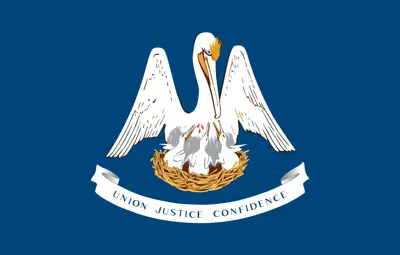
Louisiana (/luˌiːziˈænə/ (listen), /ˌluːzi-/ (listen)) is a state in the Deep South and South Central regions of the United States. It is the 19th-smallest by area and the 25th most populous of the 50 U.S. states. Louisiana is bordered by the state of Texas to the west, Arkansas to the north, Mississippi to the east, and the Gulf of Mexico to the south. A large part of its eastern boundary is demarcated by the Mississippi River. Louisiana is the only U.S. state with political subdivisions termed parishes, which are equivalent to counties. The state's capital is Baton Rouge, and its largest city is New Orleans.
