Harriet Jacobs Quotes
I was ordered to go for flowers, that my mistress's house might be decorated for an evening party. I spent the day gathering flowers and weaving them into festoons, while the dead body of my father was lying within a mile of me. What cared my owners for that? he was merely a piece of property. Moreover, they thought he had spoiled his children, by teaching them to feel that they were human beings. This was blasphemous doctrine for a slave to teach; presumptuous in him, and dangerous to the masters.
Jacobs, Harriet A. Incidents in the Life of a Slave Girl. Published for the Author, 1861, p. 20.


While many of the Indian wars were over land or were defensive in nature, the major motivation for some wars with Indians was pure greed in that captured Indians were sold as slaves.
As a British Loyalist officer, he and his men were dispatched to Savannah, Georgia. There he saw the Southern version of slavery for the first time and was shocked at the cruelty. At the end of the Revolutionary war, he and many other loyalists fled to Canada and began his political career, then representing Britain in the Caribbean. See also {591379}.


In Russia at the time, serfs were little better off than slaves. Not only did they have to obey their landlords in all things, but any who advocated disobedience on their part were beaten and sent to Siberia. Exile to the Siberian Gulags was not an invention of the Communists of the 20th century although they used that punishment in unprecedented numbers. It was used by the Czars and the Empress.


As a British Loyalist officer, he and his men were dispatched to Savannah, Georgia. There he saw the Southern version of slavery for the first. He questioned the character of the slave owners and most interesting, he tied the consumer enjoyment of Rice and Sugar by Northerners to the suffering of the Negro slaves. At the end of the Revolutionary war, he and many other loyalists fled to Canada and began his political career, then representing Britain in the Caribbean. Also see {591380}.
The language was removed in the negotiations that followed Jefferson's draft.
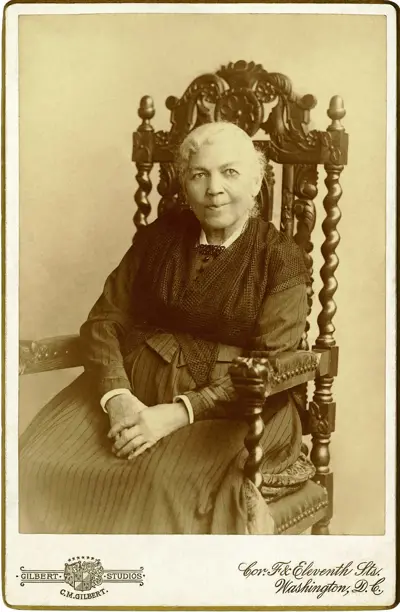
Harriet Jacobs was an African-American writer, whose autobiography, Incidents in the Life of a Slave Girl, published in 1861 under the pseudonym Linda Brent, is now considered an "American classic". Born into slavery in Edenton, North Carolina, she was sexually harassed by her enslaver. When he threatened to sell her children if she did not submit to his desire, she hid in a tiny crawl space under the roof of her grandmother's house, so low she could not stand up in it. After staying there for seven years, she finally managed to escape to the free North, where she was reunited with her children Joseph and Louisa Matilda and her brother John S. Jacobs. She found work as a nanny and got into contact with abolitionist and feminist reformers. Even in New York, her freedom was in danger until her employer was able to pay off her legal owner.
