Samuel Taylor Coleridge Quotes
I understood that you would take the Human Race in the concrete, have exploded the absurd notion of Pope's Essay on Man, [Erasmus] Darwin, and all the countless Believers-even (strange to say) among Xtians-of Man's having progressed from an Ouran Outang state-so contrary to all History, to all Religion, nay, to all Possibility-to have affirmed a Fall in some sense.
Coleridge, Samuel Taylor. Letters of Samuel Taylor Coleridge. Edited by Ernest Hartley Coleridge, Vol. 2, William Heinemann, 1895, p. 648.


This is a very good quotation showing the point of view of religious fundamentalists that if there is no fixed statement of ethics and morality as with the word of God as revealed in the Bible, what then makes anything right or wrong and the world exists in a moral behavioral vacuum. Other religionists hold that the morality is in the metaphors and philosophy of religion and not in the literal words of scripture. Still others argue that morality and religion itself is dynamic and is constantly changing. Then there are those who build their view of morality on philosophy but which is not based on a deity—Ethical Culturalists for example {592791}. Also, there are the pragmatic evolutionists who argue that cooperative behavior has evolved in man and cultural rules—morality—is also transmitted by culture and systems of law.


In the middle of the 19th century, there was an Anglican English Bishop by the name of Usher who was the first person to perform this “Biblical” analysis. Even then the absurdity of this claim was demonstrated over and over again with the science of the time. Most religious fundamentalists believe that the word “day” was really an unspecified period of time which might have been billions of years. Other religious theologians argue that the entire Genesis story was a metaphor and not meant to be taken literally. Today we know that our universe is over 18 billion years old, and the overwhelming proportions of the different animals and other life forms that have existed are long since extinct, while a few, like horseshoe crabs, are many millions of years old. New species are being created constantly. Even man, one of the more recent life forms, was well developed, had communities, and had spread over the world more than 6,000 years ago. We have archeological evidence of human life that goes back 10s of thousands of years. None-the-less, there are a number of American citizens who actually believe the 6,000 year claim, and they are entitled to their opinion regardless of how absurd it may seem to others. That is the great strength of a liberal democracy. Absurd seeming beliefs must be protected and respected. However, views that are so variant from known scientific reality may not be allowed to interfere with the teaching and public education to advocate a particular theological view and especially under the rubric of science.
Bryan participated as a prosecutor in the infamous Scopes Trial in Tennessee where a school teacher was convicted of a crime for discussing the idea of evolution in a high school classroom. This view of opposition to Evolution was actually considered too liberal by many other Biblical Fundamentalists. They were just as distressed about the other animals as well as man. Evolution explicitly contradicted the literal story of Biblical creationism and therefore was blasphemy.
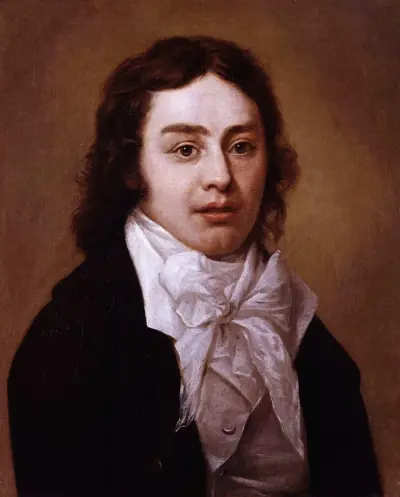
Samuel Taylor Coleridge was an English poet, literary critic, philosopher and theologian who, with his friend William Wordsworth, was a founder of the Romantic Movement in England and a member of the Lake Poets. He also shared volumes and collaborated with Charles Lamb, Robert Southey, and Charles Lloyd. He wrote the poems The Rime of the Ancient Mariner and Kubla Khan, as well as the major prose work Biographia Literaria. His critical work, especially on William Shakespeare, was highly influential, and he helped introduce German idealist philosophy to English-speaking culture. Coleridge coined many familiar words and phrases, including "suspension of disbelief". He had a major influence on Ralph Waldo Emerson and American transcendentalism.
