Esther Williams Quotes
I took a job at the pool in order to earn the five cents a day it cost to swim. I counted wet towels. As a bonus, I was allowed to swim during lunchtime.
Williams, Esther, and Digby Diehl. The Million Dollar Mermaid: An Autobiography. Simon & Schuster, 1999.


Note that her concept of a good job does not include a specific amount of compensation. Her definition requires whatever compensation it takes to have a reasonable standard of living. Businesses , economists and lawmakers have never been able to define that so they always revert to a sum of money which presumabley will buy this, but as Martin observed, sometimes id may and sometimes it may not. Food Stamps, indexed minimum wages have all been attempts to deal this this problem.


There was a small conservative wing of the then Republican Party that was committed to rolling back the New Deal. In the early part of the 21st century this wing had grown in size and was very influential in the party. They tried, with President George W. Bush leading the effort, to privatize Social Security but most of the public was having none of it, and it didn’t get very far. It was a very good thing that it did not, as in the 2009 Economic Meltdown, the Stock Market value was cut in half.
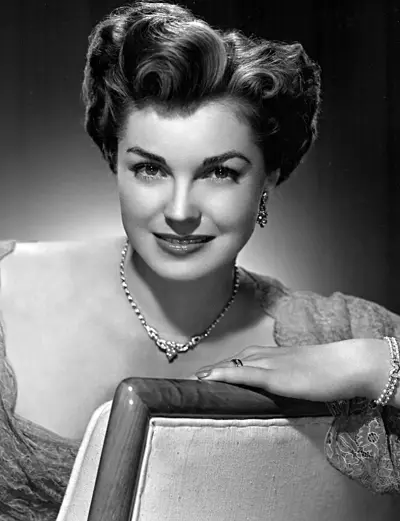
Esther Jane Williams was an American competitive swimmer and actress. Williams set multiple national and regional swimming records in her late teens as part of the Los Angeles Athletic Club swim team. Unable to compete in the 1940 Summer Olympics because of the outbreak of World War II, she joined Billy Rose's Aquacade, where she took on the role vacated by Eleanor Holm after the show's move from New York City to San Francisco. While in the city, she spent five months swimming alongside Olympic gold medal winner and Tarzan star Johnny Weissmuller. Williams caught the attention of Metro-Goldwyn-Mayer scouts at the Aquacade. After appearing in several small roles, alongside Mickey Rooney in an Andy Hardy film, and future five-time co-star Van Johnson in A Guy Named Joe, Williams made a series of films in the 1940s and early 1950s known as "aquamusicals," which featured elaborate performances with synchronised swimming and diving.
