Ruth Bader Ginsburg Quotes
I think members of the legislature, people who have to run for office, know the connection between money and influence on what laws get passed.
Ginsburg, Ruth Bader. Interview by Jeffrey Rosen. The New Republic, 28 Sept. 2014.


In general this is true when the public is aware and focused on an issue. However, most of the work of Congress is unknown to most voters and it is there that the money is so influential.


Hollings who was one of the senior experienced senators was offended by the degree to which the George W. Bush Administration and the Republican leadership had turned to lobbyists to draft legislation and amendments to pending legislation. Lobbyists often have specialized information that members of Congress do not have, so there has been in modern times communications between lobbyists and members of Congress and their staffs. However, during the Bush Presidency the practice reached an extreme where lobbyists would even write the legislative language and give it to the members in whom they had invested by giving them large campaign contributions and many perks. K Street is the fanciest street in Washington DC with some of the most expensive office space. A substantial proportion of the lobbyists have K Street offices, hence the metaphor.


In 2013 Immigration Reform was being debated in the Senate. To get a substantial majority to support the bill, an amendment was added to add many billions of dollars for the creation of 20,000 additional Federal Border Patrol Agents, buying drones and other technology. Ironically, the Senators who supported the bill because of this amendment were all conservatives who generally opposed all government spending, but many of these funds would go to Defense Contractors, one of their constituency groups, and most of the money would be a stimulus for job creation in the borders states.

He made this quotation when he was a member of the Wisconsin State legislator. He was describing the influence and interaction that corporations had with the Wisconsin state legislative process.

At the time this was a very widely held, bipartisan view. See {634818} . Given statements like this, TR if he were alive today would never be able to get the Republican Nomination for President; nor could he obtain the Democratic Nomination because of his view on the military, expansionism, defense spending and war.


Politicians and large political donors supporting the private campaign donation process tend to argue that businesses make contributions for patriotic and good government reasons and not as investments, but when business executives are asked by shareholders why they spend so much company money for campaign contributions, the inevitably respond that investing in campaign contributions provide a better return than most other investments. If they were so interested in good government they might spend more money on voter education.


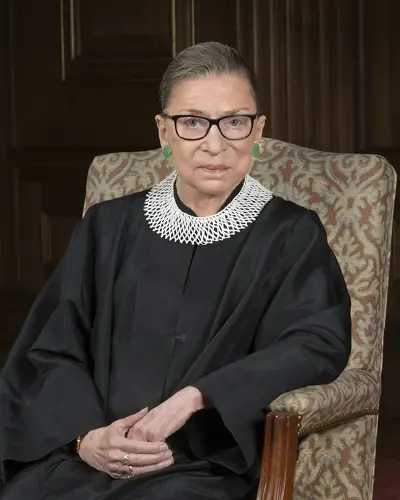
Joan Ruth Bader Ginsburg was an American lawyer and jurist who served as an associate justice of the Supreme Court of the United States from 1993 until her death in September 2020. She was nominated by President Bill Clinton, replacing retiring justice Byron White, and at the time was generally viewed as a moderate consensus-builder. She eventually became part of the liberal wing of the Court as the Court shifted to the right over time. Ginsburg was the first Jewish woman and the second woman to serve on the Court, after Sandra Day O'Connor. During her tenure, Ginsburg wrote notable majority opinions, including United States v. Virginia (1996), Olmstead v. L.C. (1999), Friends of the Earth, Inc. v. Laidlaw Environmental Services, Inc. (2000), and City of Sherrill v. Oneida Indian Nation of New York (2005).
