Mohsin Hamid Quotes
I studied about the internment of Japanese Americans during the Second World War and about how the Constitution was written by men, many of whom were slave owners. So I suppose the travel ban strikes me as coming from an era I thought we'd left behind, but I guess we haven't entirely left it behind.
Hamid, Mohsin. Interview by Terry Gross. Fresh Air, NPR, 1 Mar. 2017.


The Proclamation was a belated admission of the disgraceful internment of loyal Japanese Americans during WWII. See {587961}. “Evacuation” was the euphemism for rounding up Japanese American citizens and putting them in internment camps. Not a single Japanese American was involved in any effort to sabotage or undermine the United States. The same cannot be said about the German Americans where a few did work against U. S. interests and yet the German-Americans were never rounded up. The explanation of the difference has been long debated. Racism was a part of it; California paranoia, another. And unfortunately, Japanese Americans owned very desirable land in California and when they could no longer make their payments some interests gobbled up the land and that was a motivation for some. Regardless, it was one of the low points in American history, and warranted this Presidential and national apology.


Louis Eugene Walcott


This report was submitted to President Franklin D. Roosevelt, who accepted the recommendation and signed Executive Order 9066. The Japanese on the West Coast were then rounded up and interned by DeWitt in what was one of the lowest and disgraceful points in American history. A national apology was made 34 years later. See {635792}.


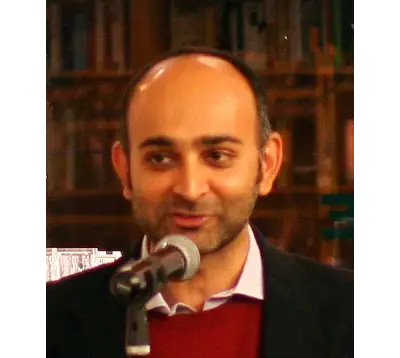
Mohsin Hamid is a British Pakistani novelist, writer and brand consultant. His novels are Moth Smoke (2000), The Reluctant Fundamentalist (2007), How to Get Filthy Rich in Rising Asia (2013), and Exit West (2017).
