Arthur Wellesley, 1st Duke of Wellington Quotes
I see no reason to suppose that these machines will ever force themselves into general use.
1st Duke of Wellington
Arthur Wellesley, 1769-1852, British Chief General at Waterloo, Ambassador to France, Prime Minister (Tory), Geoffrey Madan’s Notebooks
Sourced by: Eigen's Political and Historical Quotations


His 50 year prediction was a little too optimistic although a large percentage of the routine, and some non-routine, jobs had become automated especially in the automobile and other manufacturing arenas, and many other fields. But there were still some other jobs that were still being done without machines in 2014. Asimov was essentially right but a little early in his timing.


The Ad Hoc Committee was loosely affiliated with the Students for a Democratic Society.


Musk was one of the very few technilogical leaders who had great fear about the potential danger of artifical intelligence and thought that it should be regulated.

Computers, robots have replaced many more American workers than those who lost their jobs by having them replaced by foreign labor. Ironically, even in counties like China, South Korea, and a number of others, have "liost" millions of jobs to automation thenselves.

In the1969 mission to the moon, the lunar module control computer flashed a Program Alarm warning message, and the Mission Control officer Steve Bates, with less than 30 seconds to go, had to make a decision whether to abort the module landing or continue. He spoke to Garman, who concluded that since the message did not repeat, that the message was most likely a spurious message—a false alarm. German told him to go ahead when most others wanted to abort. As Garman was the most familiar staff member with the software, Bates followed his lead and continued the landing. Garman was right and he became known as “The Man who saved the Moon Landing”.

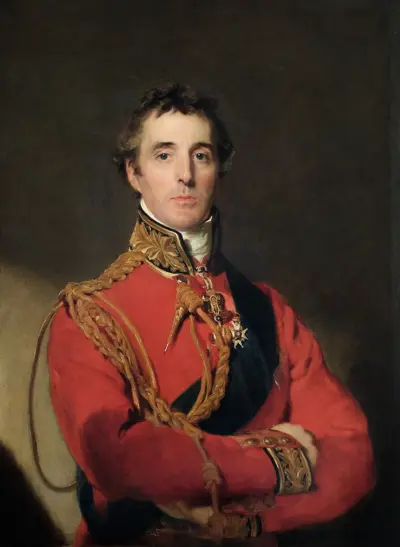
Arthur Wellesley, 1st Duke of Wellington, KG, GCB, GCH, PC, FRS was an Anglo-Irish soldier and Tory statesman who was one of the leading military and political figures of 19th-century Britain, serving twice as prime minister. He ended the Napoleonic Wars when he defeated Napoleon at the Battle of Waterloo in 1815.
