Edmund Barton Quotes
I say further that our system of education should be unsectarian.
Barton, Edmund. "Public Instruction Bill." New South Wales Parliamentary Debates, Session 1879-80, Government Printer, 1880.


This book is endorsed by major religious organizations of all faiths as well as National School Boards Association, National Education Association, National PTA, National Association of Secondary School Principals, National Association of Elementary School Principals, American Association of School Administrators and others. It is used as a guideline by most schools systems in the United States.

This is a terrific statement of Americanism at any time, but it is particularly notable in 1888. At that time anti-Catholicism and anti-Semitism were both heavy throughout the country. Jim Crowe and racism was rampant, Orientals were heavily discriminated against especially on the West Coast. Irish and Italians were not wanted in most of America except as manual laborers.

The reform bill was developed by the then current Minister of Education who views were quite opposite to Corkey’s. One of the reforms was to eliminate the Bible Teaching and other religious instructions in the public schools. Then these other undesirables would enroll in the public schools whereas before, the Protestants were able to operate segregated public schools where very few Catholics would attend. The religious bigotry by the Catholics in the South of Ireland was equaled if not exceeded by that of the Protestants in Northern Ireland.

The Soviet state had varied views regarding religion in different times. In the early days of the Russian Revolution, the Russian Orthodox Church was a major supporter of the Csar and serfdom. That caused a certain hostility to the Russian Church. That Church meanwhile had previously been extremely hostile to Jews and Roman Catholics and never recognized Protestant Churches. So Russians as a group were already discriminating against all religion except the Russian Orthodox Church before the Communist Revolution took place. When the Russian Communists were well entrenched in power, they saw the Russian Church as an obstacle to modernization and were hostile to any group that had a loyalty to any force or deity that was not the Soviet State.


Similar formal opposition to Jewish parochial schools was more formally voiced later—see American Council for Judaism.

The trial convicted a teacher, Scopes, of the “crime” of teaching the theory of evolution in a school.

The Saudi Arabian Royal Family had been large financial and political supporters of the Wahabbi sect of Sunni Islam. The mullahs in turn supported the monarchy and provided religious cover, so important in Islamic countries. However, the Wahhabis took the Saudi money and set up Madrassas (Islamic Schools) throughout the kingdom and in many other countries of the world including the United States. However, the Wahhabi curriculum included extensive hateful and violence advocating materials regarding non-Muslims. After 9-11, the Royal Family realized that they were also the targets of the terrorists who ironically were recruiting many of their fighters and suicide bombers from the very Wahhabi Madrassas that the Saudis had funded. They claim that they were not previously aware of the extent of the violence taught in the Madrassas (hard to believe) but they resolved to make changes. As a first step, the examined all the texts and teaching guides of the institutions they had funded and demanded that changes be made. (However, they had little influence on those Madrassas outside the kingdom that were not dependent on current Saudi money such as many of the schools in Pakistan and The West Bank and Gaza. These did not change and continued to produce terrorists.). al-Faisal however showed that the Saudi’s were now serious about reform of the teaching by going a large step further, and focusing on the teachers. Saudi Arabia began a program to vet all the teachers, imams and other clerics, a step that was a remarkable reversal from the situation on 9-11.


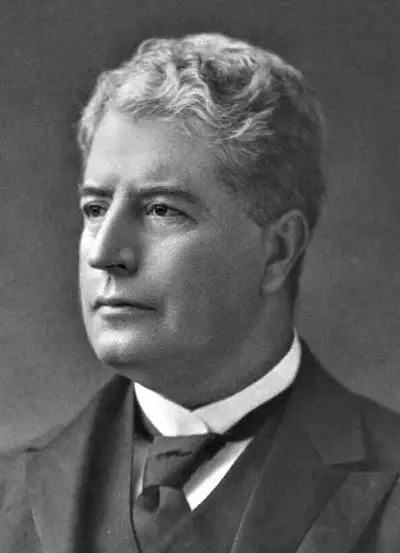
Sir Edmund "Toby" Barton, GCMG, KC was an Australian politician and judge who served as the first Prime Minister of Australia, in office from 1901 to 1903. He resigned to become a founding member of the High Court of Australia, where he served until his death.
