Edmund White Quotes
I lived through the Fifties in the Midwest when everything that was happening - the repression of homosexuality, for instance, the demonization of the Left, the giggly, soporific ordinariness of adolescence, the stone-deafness to the social injustice all around us - seemed not only unobjectionable but also nonexistent.
White, Edmund. The Burning Library: Essays. Knopf, 1994.


Tolstoy saw this as a much more general phenomenon than classic cases where the English dominated India. He not only included ethnic minorities (like the Chinese who dominate the economy of the Philippines or the Shiite-Sunni dominance battles in the Middle East, but he included a classic business situation where the minority (the wealthy owners and bosses) dominate and control the majority (the workers).


Agree resigned from the CIA in protest to its political positions.


There was much democratic pressure from the Russian workers in the decade after the Russian Revolution. This was brutally suppressed by Stalin Immediately after the Russian Revolution, the provisional government appointed him as Ambassador to the United States. However, the provisional government was supplanted when the Bolsheviks took over. Not enamored of Communism, he stayed in the United States with many other Russian refugees.
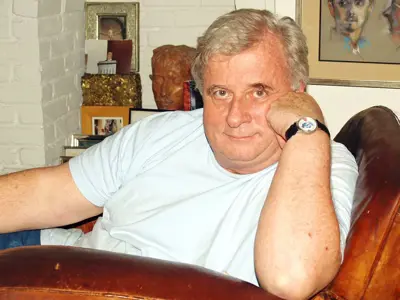
The novel The Married Man (2000) is gay-themed and draws on White's life. Fanny: A Fiction (2003) is a historical novel about novelist Frances Trollope and social reformer Frances Wright in early 19th-century America. White's 2006 play Terre Haute (produced in New York City in 2009) portrays discussions that take place when a prisoner, based on terrorist bomber Timothy McVeigh, is visited by a writer based on Gore Vidal. (In real life McVeigh and Vidal corresponded but did not meet.)
