Wangari Maathai Quotes
I have seen a lot of men, for example, who will make a will and include their daughters whether they are married or not. And perhaps the greatest change of attitude is that today, at least in Kenya, if you don't send your child to school - unless it's a matter of poverty or religion, and it is not that there no schools - then people wonder, "why the hell don't you send your children to school?" Now that's a very big jump from when I was going to school and educating girls was an exception to the rule.
Maathai, Wangari. The Challenge for Africa. Pantheon Books, 2009.


In the last centuries, Egypt has been intellectually more advanced than the other Arab countries. It has a significant number of modernists who oppose religious influences on Government. During the Arab Spring when the old regime was ousted, the modernists had hopes that a modern democracy would be formed that was not controlled of even significantly influences by religious leaders and where women would have equal rights. However, the first election the Muslim Brotherhood, a religious party won, and then tried to institute Islamic law—Sharia. A coup ousted the Muslim Brotherhood, and then many dreamed again of a modern, non-sexist, secular democracy. Professor Ajami tried to give them a more realistic view.


The Emperor was then only 20 years old and it is doubtful that this was actually written by him personally or even that he was the originator or driver of this policy—probably the strongest statement regarding education of any nation in history. Nonetheless, it is a great quotation on the role of education in the nation. He even ordained that all girls should be educated—an achievement which had not been achieved by the majority of countries 140 years later in 2012. Most incredible about this quotation is that the Emperor made everything else of importance subordinate to the education of children." Meiji the Great


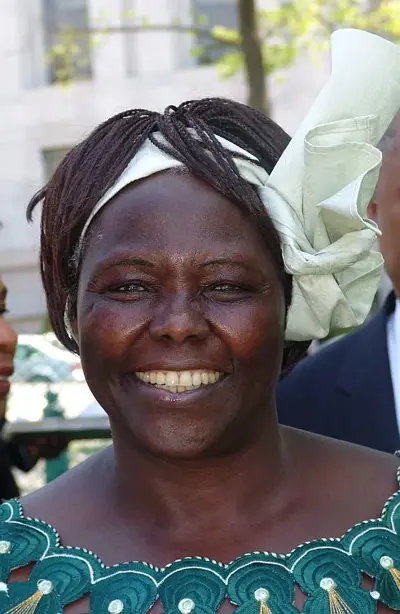
Wangarĩ Muta Maathai was a Kenyan social, environmental, and political activist and the first African woman to win the Nobel Peace Prize. As a beneficiary of the Kennedy Airlift she studied in the United States, earning a Bachelor's Degree from Mount St. Scholastica and a Master's Degree from the University of Pittsburgh. She went on to become the first woman in East and Central Africa to become a Doctor of Philosophy, receiving her Ph.D. from the University of Nairobi in Kenya.
