Richard Dimbleby Quotes
I have never seen British soldiers moved to such cold fury, as the men who opened the Belsen camp this week.
Belsen was one of the largest German Death Camps where almost a million Jews, Gypsies, dissenters, and non conformists were gassed and burned in WWII.
Richard Dimbleby, British Journalist & Anchorman, A Visit to the Belsen Death Camp, Germany, April 19, 1945
Sourced by: Eigen's Political and Historical Quotations

He was shot in 1944 for his involvement in an attempt to kill Hitler

At this point, the horrors of the German concentration death camps were generally known by the world press. This quotation shows the denial that the Irish Free State was in about the German Nazi atrocities. The 6-county Nationalsits were the Irish counties in Northern Ireland that did not join the Irish Free State and so far as the Catholic Irish were concerned, the Catholics of Northern Ireland were a persecuted minority undergoing oppression and that was not they believed morally different from the murders of millions of Jews, Gypsies and handicapped people in Europe. If the Free State Irish publicly admitted the difference, they would morally have had to join the allies and De Valera was totally opposed to that. Over 70,000 Irishmen and women rejected the moral stand of their government, and volunteered for the British Army to the great distress of the Free State leaders like De Valera. See {639722} for his personal denial of reality.


This has been true in just about every conflict. In WWII however, there were a highly disproportionate ration of atrocities with those of the axis forces dwarfing those of the U. S. and its allies. Further, after the war, those allied atrocities that did take place were published. In addition, one basic difference is in the policies of the fighting forces and their governments as opposed to individual actions by soldiers. In WWII, the allied atrocities were of the latter type, but the axis atrocities involved both.

The general was replacing George S. Patton as commander of the Third Army. Patton had opposed the deNazification policy of the allies and caused a great deal of public relations difficulty for the army command and the administration, as reporters would frequently print his views. Truscott was one of Patton’s loyal assistants. The minute he took over, the press wanted to find out if his views were the same as his former boss regarding the Nazis. They were quite different. Reporters had no story.


The German Generals talked him out of the idea, but the quotation gives an insight into the Character of the German Leader. It never occurred to him that the Russians might retaliate and murder German prisoners.


Many German officials, after the war, tried to justify the Concentration Camps. However, the argument has little historical merit as by the time the Nazis implemented them, they had complete control of the country and were in no danger of Civil War. And certainly the torture, medical experiments, and murders were not required to prevent civil strife. And using inmates as slave laborers in Donitz’s shipyards had nothing to do with civil war. After the war Donitz was found guilty of Unrestricted Submarine Warfare and using thousands of slave laborers in his shipyards. He was sentenced to 10 years, one of the lightest sentences if the German War Crimes Trials. He himself was not only an enthusiast about the concentration camps but was a murderous anti-Semite as well. See {624978}. The thought that the Germans had to kill little children to avoid civil war is as absurd as any argument could be.


He was a viscious anti-Semite who attracted to his party extreme right wingers, Nazi Sympathers and apologists for the Vichey Franch government. The party was rejected by the majority of French voters, but when his daughter took over the party, she was not an anti Semite but foudn it hard to shake the party's image which was alaysa associated with her name even when she actually kicked her father out of the party.


Eichmann had been responsible for the logistics of murdering most of the over 6 million civilians in WWII. With the aid of pro Nazis in South America he had been hiding there from the allies and justice. Israeli agents located him, kidnapped him, and transported him to Israel where he was tried and hung for crimes against humanity.
The assassination was attempted in 1944 and after its failure, he was shot be a firing squad.

The note was found in an abandoned Japanese camp on Bataan. There are some who believe that this note was a forgery. However, most think it genuine as it reflected one of the Japanese
“aces in the hole” to defend against an allied invasion of the Japanese mainland. It was one of the reasons that some American planners advocated use of the Atomic Bomb. Of course that was a real risk of using the bomb. The Japanese might be so angry and feel morally abused and kill the many allied prisoners they had. Many thought it was a lesser risk because it did not have the symbolic animus that foreigners occupying the Japanese homeland had. The quotation illustrates the amazing complexity that the American and allied leadership faced trying to end WWII in the Pacific.

“Lebensraum” was a German expansionist concept of the time which has no good English translation. Literally, it means “living room”. The Germans had this notion that the German race and nation had to have more land to accommodate the growth of the German people. And because the Germans were a superior race, they were entitled to the land surrounding Germany in which to have Germans grow and thrive. The “inferior” peoples who lived on the land could be exterminated so that Germany would have this expansion room. The “Death’s Head units” were special German elite troops who used the Death’s Head as a symbol on their uniforms. Some of the Generals were concerned that the rest of the world would condemn Germany and possibly interfere if they exterminated the Poles. Hitler pointed to the example of the Turks who had killed most of the Armenians in the Armenian Genocide in the early 20th century. They got away with it with no outside interference, and there were no international consequences for Turkey. Hitler, convinced that the Armenian genocide was the precedent, thought Germany could easily get away with murdering the Gypsies, seriously handicapped, homosexuals, Russians, Poles and Jews. For other quotations on the Armenian Genocide, see {51838}, {638251}, {620602}, {620603}, {620604}, {620605}, {620600}, and {620606}

The Germans killed 22 million Russians, most deliberate murders and not collateral damage, in WWII.

Funk was found guilty and sentenced to life in prison. He was released for ill health shortly before he died.

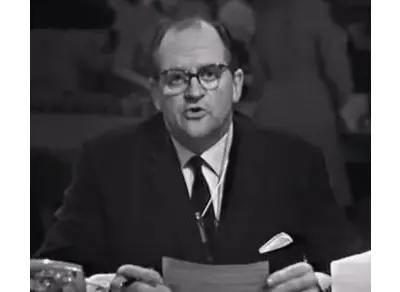
Frederick Richard Dimbleby, CBE was an English journalist and broadcaster, who became the BBC's first war correspondent, and then its leading TV news commentator.
