Benjamin Wittes Quotes
I defend non-criminal detention.
Wittes, Benjamin. Law and the Long War: The Future of Justice in the Age of Terror. Penguin Press, 2008.


First American Military Manual. Roger’s Rangers of the French & Indian War were the first using unconventional warfare and invented the “deep raid” when they went in stealth all the way to Quebec and defeated the Abnaki Indians in their home village rather than defend against the Indians’ & French coordinated attacks on upper York State. Rogers was portrayed by Spencer Tracy in the film Northwest Passage depicting the raid.


The sheriff not only operated chain gangs in the 1990's but also had female prisoners chained together doing road work.

A priest, friar or monk with this commission could and did, remove from the custody and control of the local judges, bailiffs and law enforcement officers clerics who had run afoul of the law. At the time the word “clerk” meant any churchman. The principle at the time was that the state could not judge or dispense justice or punishment to members of the church. Only the church could try and convict clerics and they did that persiant to cannon (religious) law. In theory, the bearer of this commission would take custody of an accused criminal who was a churchman, and bring him to the Bishop who would handle the case under Ecclesiastical Law. Often that meant, doing nothing or minor penitence for a crime that could even bring the death penalty under civil law. Historically there has been a major struggle in the West between the churches and civil governments that still goes on to this day in countries like Ireland. In America, the early 21st century saw the Roman Catholic bishops covering up crimes of sexual predation on the part of Priests. Many people were also outraged that the bishops did not report the Priests to the police, but this was unfortunately a throwback to this historical notion that the Church only can deal with the discipline and legal matters involving church personnel or property. Historically, reporting matters like this to civil authorities for handling is only about 200 years old, while the system illustrated by this quotation had been in place for about 1200 years before.

In 1643 the Massachusetts Bay Colony wanted to dominate the region. Miantonomi, the Narragansett Indian Chief had a large well organized tribe who while friendly with the English were very independent. The Mohegan Indians, close allies of the colonists captured Miantonomi and turned him over to the Colony. Governor Winthrop’s actions have always been a disgrace to the justice of the Colony. Winthrop then turned him over to his traditional enemy, Chief Uncas, of the Mohawk to remove him from the boundaries of the Puritan Colony and then tomahawk Miantonomi to death. Winthrop actually sent several Puritan Englishmen to “see the execution for our more full satisfaction.” Among Miantonomi’s “evil” deeds was the fact that he gave Roger Williams, a religious and political dissenter from Winthrop’s Colony and religious “heretic”, a large tract of land (Providence) for his colony.

She was a teenager at the time. The leaders organized some entertainment and she performed traditional Japanese dances. In the beginning there was no school, no education or training, no entertainment. Later there were some rudimentary opportunities provided by the authorities.


CREEP in the Nixon Campaign. He was himself a convicted Watergate conspirator
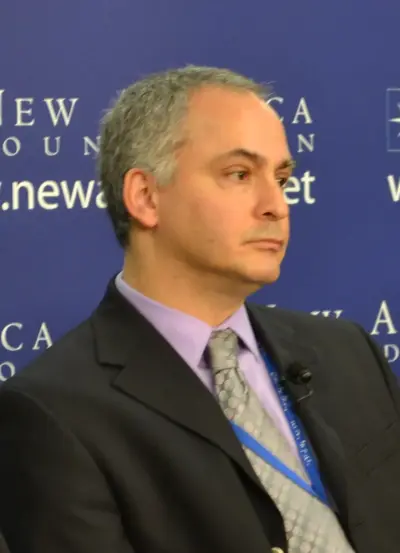
Benjamin Wittes is an American legal journalist and Senior Fellow in Governance Studies at the Brookings Institution, where he is the Research Director in Public Law, and Co-Director of the Harvard Law School–Brookings Project on Law and Security. He works principally on issues related to American law and national security. Along with Robert M. Chesney and Jack Goldsmith, Wittes cofounded the Lawfare Blog. Wittes is also a member of the Hoover Institution's Task Force on National Security and Law. Wittes is a frequent speaker on topics of detention, interrogation, and national security, before academic, government, policy, and military audiences. He also co-hosts the Rational Security podcast.
