Hasan Mazhar Quotes
I cannot do what you have asked me to do.
See {612638}, {620604}, & {620603} for the orders he refused. He was fired and ostracized from his position by the Young Turk Government. However, after the war, when the new government committed to holding a tribunal of the major war criminals, he was appointed to head the Commission of Inquiry. There were almost no experienced jurists and administrators in Turkey who did not participate in the Armenian Genocide and were credible to lead the attempts at justice. See {620596} and {620595} for the triggers to establishing the commission. In the final analysis, there were a few tried and one governor of a province was hanged and a few others received short jail sentences.
Hasan Mazhar, *, Turkish Governor of Ankara Provence, Refusal of Talaat’s Order to Massacre the Armenians in the Armenian Genocide, 1915, Quoted in Dadrian, A Textual Analysis of the Key Indictments
Sourced by: Eigen's Political and Historical Quotations

Mehmet Talaat Pasha. Americans in Turkey were witnessing the attacks on the Armenian minority and many reported and had photographed various incidents, though few had any conception of the scale of the massacres. To avoid “bad publicity”, the Turks banned Americans from the nation. This quotation documents this and shows how after getting rid of the American eye witnesses, the government ordered that even Armenian babies by murdered.
The Christian Armenians, a minority in Turkey and its lands, were discriminated against like other non Muslim minorities in the Ottoman Empire. But during the Turkish War with Russia and WWI, some Armenians defected and served on the Russian side. Many Turkish citizens took revenge on Armenians by means of murder and torture. Soon, the extermination of the Armenians became the official “Young Turk” government policy. Hundreds of thousands of Armenians were killed outright, and about an equal number were “deported” to special areas. Many died of malnutrition along the forced march of Ethnic Cleansing. Others were murdered as they were deported. No one knows exactly how many Armenians were killed with estimates ranging from ½ million to 4 million. This was the first genocide of the 20th century. Modern Turkish leaders however, are in denial about the Armenian deaths. They claim that there was a war and food was scarce; the only Armenians killed, the claimed were proven Russian agents. They further claim that the Armenian behavior was in large part responsible for the forced deportations because of their lack of patriotism and unwillingness to help the Turkish authorities identify the Russian agents. Most Turks today are unaware of the Armenian Genocide as nothing is taught about the massacres in schools or other institutions. It is against the law in Turkey to even have an intellectual study of the Turkish behavior towards the Armenians, much less publish anything about it.

Although nether he or the Sultan had made vigorous efforts to stop the massacres, he had promised the world community that Turkey would see that justice was done (See {620596} ). However, there were a few tried and one governor of a province was hanged and a few others received short jail sentences. Talaat, the worst of The Young Turks regarding the genocide, escaped to Germany. But he was tracked by a surviving Armenian who assassinated Talaat. The assassin was acquitted by a sympathetic German court which ruled that the extermination of the assassin’s family had been so traumatic that temporary insanity relieved the assassin of criminal responsibility.
Turkey, under the control of the triumvirate of the 3 Young Turks had massacred almost all of the Armenian population in the area claimed by Turkey. At the end of WWI, there were many demands that those who ordered the policy of a Turkish genocide and those who carried it out by brought to justice—tried and punished. The Sultan had done little if anything to stop the slaughters although he was very weak, Turkey under the Young Turks had also picked the wrong side and allied with the Germans. The Sultan and his Grand Vizier were trying to pick up the pieces and maintain the Ottoman Empire as best they could despite they the fact that they lost control of much of their vast territory. At the Paris Peace Conference, the Grand Vizier virtually admitted the crimes and committed the Turkish government to determining the guilty and bringing them to justice. He actually had 50 of the worst offenders arrested (See {620595}.). However, there were a few tried and one governor of a province was hanged and a few others received short jail sentences. Talaat, the worst of The Young Turks regarding the genocide, escaped to Germany. But he was tracked by a surviving Armenian who assassinated Talaat. The assassin was acquitted by a sympathetic German court which ruled that the extermination of the assassin’s family had been so traumatic that temporary insanity relieved the assassin of criminal responsibility.
Mehmet Talaat Pasha. Many Turks at first resisted the orders for the Armenian Genocide. However the Young Turks—the leaders of the Government—were adamant. Most military, civil servants, and officials went along with this horrible crime. The Christian Armenians, a minority in Turkey and its lands, were discriminated against like other non Muslim minorities in the Ottoman Empire. But during the Turkish War with Russia and WWI, some Armenians defected and served on the Russian side. Many Turkish citizens took revenge on Armenians by means of murder and torture. Soon, the extermination of the Armenians became the official “Young Turk” government policy. Hundreds of thousands of Armenians were killed outright, and about an equal number were “deported” to special areas. Many died of malnutrition along the forced march of Ethnic Cleansing. Others were murdered as they were deported. No one knows exactly how many Armenians were killed with estimates ranging from ½ million to 4 million. This was the first genocide of the 20th century. Modern Turkish leaders however, are in denial about the Armenian deaths. They claim that there was a war and food was scarce; the only Armenians killed, the claimed were proven Russian agents. They further claim that the Armenian behavior was in large part responsible for the forced deportations because of their lack of patriotism and unwillingness to help the Turkish authorities identify the Russian agents. Most Turks today are unaware of the Armenian Genocide as nothing is taught about the massacres in schools or other institutions. It is against the law in Turkey to even have an intellectual study of the Turkish behavior towards the Armenians, much less publish anything about it. The Christian Armenians, a minority in Turkey and its lands, were discriminated against like other non Muslim minorities in the Ottoman Empire. But during the Turkish War with Russia and WWI, some Armenians defected and served on the Russian side. Many Turkish citizens took revenge on Armenians by means of murder and torture. Soon, the extermination of the Armenians became the official “Young Turk” government policy. Hundreds of thousands of Armenians were killed outright, and about an equal number were “deported” to special areas. Many died of malnutrition along the forced march of Ethnic Cleansing. Others were murdered as they were deported. No one knows exactly how many Armenians were killed with estimates ranging from ½ million to 4 million. This was the first genocide of the 20th century. Modern Turkish leaders however, are in denial about the Armenian deaths. They claim that there was a war and food was scarce; the only Armenians killed, the claimed were proven Russian agents. They further claim that the Armenian behavior was in large part responsible for the forced deportations because of their lack of patriotism and unwillingness to help the Turkish authorities identify the Russian agents. Most Turks today are unaware of the Armenian Genocide as nothing is taught about the massacres in schools or other institutions. It is against the law in Turkey to even have an intellectual study of the Turkish behavior towards the Armenians, much less publish anything about it.
Mehmet Talaat Pasha. This document is one of the coldest writing in the history of humanity. In modern times, only the German Nazis would exceed this evil in brazen purpose. The Christian Armenians, a minority in Turkey and its lands, were discriminated against like other non Muslim minorities in the Ottoman Empire. But during the Turkish War with Russia and WWI, some Armenians defected and served on the Russian side. Many Turkish citizens took revenge on Armenians by means of murder and torture. Soon, the extermination of the Armenians became the official “Young Turk” government policy. Hundreds of thousands of Armenians were killed outright, and about an equal number were “deported” to special areas. Many died of malnutrition along the forced march of Ethnic Cleansing. Others were murdered as they were deported. No one knows exactly how many Armenians were killed with estimates ranging from ½ million to 4 million. This was the first genocide of the 20th century. Modern Turkish leaders however, are in denial about the Armenian deaths. They claim that there was a war and food was scarce; the only Armenians killed, the claimed were proven Russian agents. They further claim that the Armenian behavior was in large part responsible for the forced deportations because of their lack of patriotism and unwillingness to help the Turkish authorities identify the Russian agents. Most Turks today are unaware of the Armenian Genocide as nothing is taught about the massacres in schools or other institutions. It is against the law in Turkey to even have an intellectual study of the Turkish behavior towards the Armenians, much less publish anything about it.


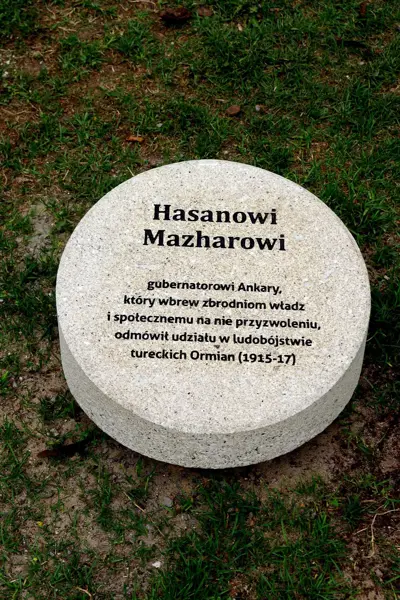
Hasan Mazhar or Hasan Mazhar Bey was a Governor of Ankara in the Ottoman Empire, who refused to participate in the genocide of Armenians in 1915-1917 for which he was dismissed. In 1918, he led the Mazhar Commission investigating the crimes of the Armenian Genocide.
