Paul Samuelson Quotes
I can tell you, because I serve on so many nonprofit boards - where half of us are academics and half of us are from Wall Street - that there's no CEO who understands at all a derivative. All they know is that somebody tells them in their organization, 'We've got a wonderful profit center.'
Samuelson, Paul A. Interview by Daniel Yergin and Joseph Stanislaw. Commanding Heights: The Battle for the World Economy, PBS, 2002.


Addressing Theodore Roosevelt in 1896:


This is typical of almost all government and semi government agencies. Does a government agency buy for as low a price as possible or give all a fair chance to compete, do police stop crime at the cost of impinging on civil rights, in the aftermath of the 2008 meltdown, does the government seek justice and punish the banks who caused the problem or build up the financial system so that investors and capitalists will have confidence and bring the system back to normal. Government, churches, charities and other non profit organizations all have this conflict between two or more duties and desirable objectives. This is one of the reasons that many of the great corporate leaders have failed in working for the government—they have difficulty coping with ambiguity and conflict of objectives. A company can ruin a community by moving a factory or office to a less expensive location, but generally the negative consequences are not major factors. For a government agency to ruin a community to save a little money is a much different matter.
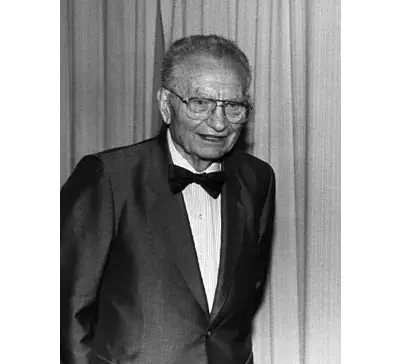
Paul Anthony Samuelson (May 15, 1915 – December 13, 2009) was an American economist who was the first American to win the Nobel Memorial Prize in Economic Sciences. When awarding the prize in 1970, the Swedish Royal Academies stated that he "has done more than any other contemporary economist to raise the level of scientific analysis in economic theory". Economic historian Randall E. Parker has called him the "Father of Modern Economics", and The New York Times considers him to be the "foremost academic economist of the 20th century".
