James M. Curley Quotes
I ask every God-fearing citizen to save Boston from the banks and the railroads.
James M. Curley, 1874-1958, U. S. Congressman (Democrat, MA), Mayor of Boston, Campaign Speech, 1913
Sourced by: Eigen's Political and Historical Quotations


The “rebate agony” referred to a corrupt practice of the Railroads and the Large Monopolies. The railroads charged a very high rate for the transportation of important products like beef and oil. However, secretly they gave back a large percentage of the transportation rate charged to the trusts. They in turn could cut their prices and undersell all the smaller competitors who were paying “full freight” and could not afford to match the lower price. As soon as the smaller competitors were driven out of business in an area, the trust raised its rates even higher than they charged originally. The Railroad had made a small but reasonable profit on the freight of the trusts but they were guaranteed all their business. They also made huge profits on the higher rates that the small companies paid until those companies were driven out of business. Journalists like Ray Baker and Ida Tarbell had uncovered the rebate scheme which enabled the trusts to steal high amounts from the general public through unreasonably high prices. President Theodore Roosevelt was committed to try and regulate the railroads and not allow rebates but charge the same public rate to all with no rebates. Socialists like Sinclair, thought that this attempt would be hopeless—that the damage had already been done, and the trusts now had so much money that they could buy state legislatures and many in Congress to preserve their dominance.


McFadden and a few others were haters of private bankers in general and to them foreign bankers were the worst of all.


The President had decided to aggressively push for railroad regulation to end the rate rebate abuses that were used to support the monopolies like Standard Oil. In vintage Roosevelt tactics, he gave his first major speech on the subject in the setting and forum that would be most opposed to it. The Union League Club of Philadelphia in included the wealthiest men in the area where were most opposed to any Federal Regulation of anything. All the major railroad executives and stock owners and traders were also members. The President wanted to persuade the opponents to change their positions, and sometimes he did. He also was driven by his concept of sports and athletics so that the “opposition” should have “fair notice” for the contest ahead.

For many general government regulations—labor, environment, non discrimination—the small business has a proportionately heavier burden of compliance. So large businesses have always been able to count on small business to lobby against regulation and for deregulation. However, when it comes to financial regulation such as the Dodd-Frank regulations essentially apply to large businesses. As a matter of fact, small businesses were on many ways the most frequent victims of the large banks and investment bank excesses in the Meltdown of 2008. Before most of the regulations could even take effect, the financial industry was already trying to get small business to lobby to roll back the protective regulations preventing future meltdowns and bank failure resulting from loose regulation and greedy irresponsible financial industry behavior. The President campaigned to convince the small business not to support the finance industry over their usual “knee jerk” reaction to any regulation.

In the Great Recession thousands of bank executives of the banks that received government bailouts committed fraud and perjury providing false information under oath and foreclosing on mortgages illegally. There were so many bank felons that the Justice Department decided not to prosecute any of them and let the Banks pay relatively small fines instead. Then the banks paid the crooked employees bonuses. Paul was one of the few members of Congress who favored prosecution of all the guilty bankers regardless of the number.
Many of the richest people continue to acquire more money via illegal and immoral means. See {630537}.
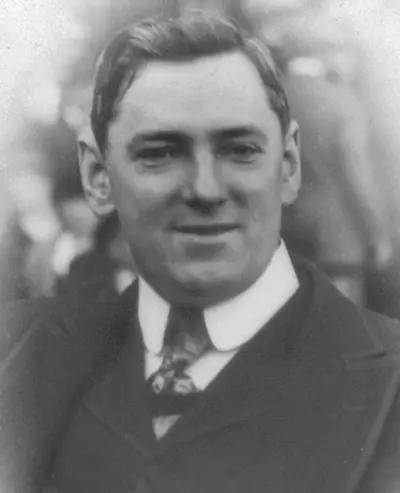
James Michael Curley was an American Democratic politician from Boston, Massachusetts. He served four terms as Mayor of Boston. He also served a single term as Governor of Massachusetts, characterized by one biographer as "a disaster mitigated only by moments of farce" for its free spending and corruption. He also served two terms, separated by 30 years, in the United States Congress and was a frequent candidate for other state and national offices. He was twice convicted of criminal behavior and notably served time in prison during his last term as mayor. He is remembered as one of the most colorful figures in Massachusetts politics.
