Wilfrid Laurier Quotes
I am not here to parade my religious sentiments, but I declare I have too much respect for the faith in which I was born to ever use it as the basis of a political organization.
Laurier, Wilfrid. "Political Liberalism." Speech, 26 June 1877, Quebec City. Wilfrid Laurier on the Platform, edited by Ulric Barthe, Turcotte & Menard's Steam Printing Office, 1890, p. 73.


Spinoza’s ideas were considered so radical and dangerous that he was the only man in history who was excommunicated by the Catholics, the Jews and the Muslims.
All modern legal systems conflict in some respects with a literal interpretation of the Koran which is the basis for the traditionalists view of Sharia—Islamic law. Therefore a student of modern law is learning things which go against Sharia as interpreted by fundamentalists. There was a time when Jewish and Christian American religious families were uncomfortable with studding modern law as there were contradictions with Biblical law. There are still a few.


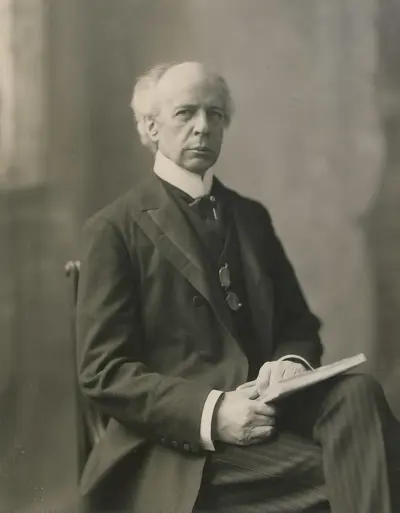
The second child of Carolus Laurier and Marcelle Martineau, Wilfrid Laurier was born in Saint-Lin, Canada East (modern day Saint-Lin-Laurentides, Quebec), on 20 November 1841. Laurier was among the seventh generation of his family in Canada. He was a sixth-generation Canadian. His ancestor François Cottineau, dit Champlaurier, came to Canada from Saint-Claud, France. He grew up in a family where politics was a staple of talk and debate. His father, an educated man having liberal ideas, enjoyed a certain degree of prestige about town. In addition to being a farmer and surveyor, he also occupied such sought-after positions as mayor, justice of the peace, militia lieutenant and school board member. At the age of 11, Wilfrid left home to study in New Glasgow, a neighbouring village largely inhabited by immigrants from Scotland. Over the next two years, he familiarized himself with the mentality, language and culture of British people. Laurier attended the Collège de L'Assomption and graduated in law from McGill University in 1864.
