Alexander Hamilton Quotes
Humanity and good policy conspire to dictate, that the benign prerogative of pardoning should be as little as possible fettered or embarrassed. The criminal code of every country partakes so much of necessary severity, that without an easy access to exceptions in favor of unfortunate guilt, justice would wear a countenance too sanguinary and cruel.
Arguing for the Constitution's granting the unfettered Pardoning Power to the President.
Alexander Hamilton, "The Command of the Military and Naval Forces, and the Pardoning Power of the Executive", First Published in The New York Packet, New York City, March 25, 1788 The Federalist Papers : No. 74
Sourced by: Eigen's Political and Historical Quotations


The Vice President’s Chief of Staff, Scooter Libby, had committed criminal acts in his zeal to threaten an experienced American Diplomat who had gone on an assignment for the CIA and reported information that cast doubt on the story that the Iraqis were about to deploy a nuclear weapon, thus giving ammunition to the few people in Washington who did not want to invade Iraq. To hurt the Ambassador, Libby leaked the fact to the press that his wife was a covert CIA agent. This not only ruined her career as she had been outed, a crime, but she was one of the CIA’s most effective agents whose contacts abroad were then put in terrible danger as having been working with a spy. No one at the time knew who the leaker was, but Bush was furious—see {630116}. He ordered all White House staff to find the leaker. The Vice President and Libby did not tell the President who the leaker was thinking that no one would ever find out. But when it was discovered it was public and Libby was indicted and faced trial. In the last days of Bush’s presidency Vice President Cheney put tremendous pressure on the President to Pardon Libby as did the extreme right wing of the Party. Cheney accused Bush of “leaving wounded on the battlefield’ arguing that Libby did everything for the President and his decision to invade Iraq. Bush had no formal policies and rules about pardons that he could turn to or ask a staffer to determine if the case warranted it. He finally yielded and commuted Libby’s prison sentence but left intact the $240,000 fine, the community service and the conviction of a felony which caused Libby to lose his license to practice law. Given Bush’s angry statements about the leak before the leaker was determined, he was accused of being a partisan hypocrite, uncaring about our agents safety and national security when his associates were guilty. The VP and the Republican extremists were also angry that Bush did not Pardon Libby completely and left the felony conviction on his record. This plagued Bush in the latter days of his presidency where his popularity had sunk very low. He wanted to help the new President avoid the same mistake. Ironically Clinton did not take his advice to have a firm pardon policy and in the closing days of the Clinton administration where he was very popular despite the partisan accusations and attempts to impeach him, ended up under great pressure for pardon’s and made some that have tarnished his reputation ever since.


Unfortunately, his close successors did not share Alexander’s surprisingly modern view.


Many like Black were concerned that prosecutors had the power to decide who would be charged, with what crimes, what penalties to ask for, and even able to start or end investigations of private citizens and politicians. By overcharging they are able, if they choose, to intimidate many people into pleading guilty, even for crimes that the never committed, in order to avoid taking a chance and possible have a very long jail sentence. Thus they were the most powerful people in the legal system, and had more power and less accountability, checks and balances of any public figures except perhaps for Federal Judges.


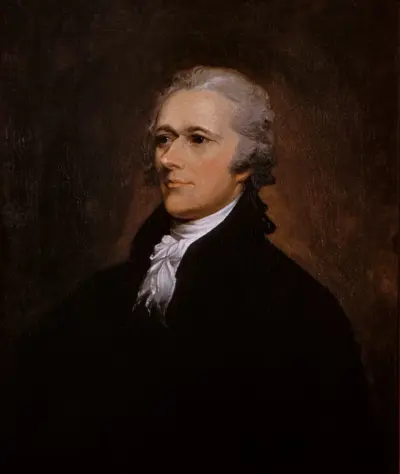
Alexander Hamilton was an American statesman, politician, legal scholar, military commander, lawyer, banker, and economist. He was one of the Founding Fathers of the United States. He was an influential interpreter and promoter of the U.S. Constitution, as well as the founder of the nation's financial system, the Federalist Party, the United States Coast Guard, and the New York Post newspaper. As the first secretary of the treasury, Hamilton was the main author of the economic policies of George Washington's administration. He took the lead in the federal government's funding of the states' debts, as well as establishing the nation's first two de facto central banks, the Bank of North America and the First Bank of the United States, a system of tariffs, and friendly trade relations with Britain. His vision included a strong central government led by a vigorous executive branch, a strong commercial economy, government-controlled banks, support for manufacturing, and a strong military.
