Wilhelm Dilthey Quotes
However, the sciences of society and of history retained their old subservient relation to metaphysics for a long time - well into the eighteenth century.
Dilthey, Wilhelm. Selected Works, Volume I: Introduction to the Human Sciences. Edited by Rudolf A. Makkreel and Frithjof Rodi, Princeton University Press, 1989, p. 60.


Much of modern science involves non-intuitive concepts that can rarely if ever be discovered using common sense. It was hard enough for most people to accept the notion of an infinite number, but now we know that there are many infinite numbers and they are all different form one another. Darwinian thinking was contrary to most learned thought of the day, and even much public opinion today. Even Albert Einstein had to struggle to comprehend the findings of Quantum Mechanics which are very non intuitive—one object can be in two different places at the same time. Meanwhile, most people are totally unaware that the world around is does not correspond to normal human intuition and common sense. Yet these are the same and only tools that we continue to use in making decisions about our society. And the fundamental truths of yesterday, the foundation of past thinking and glory, are the naïve simplifications and errors of today and become the superstitions of tomorrow.


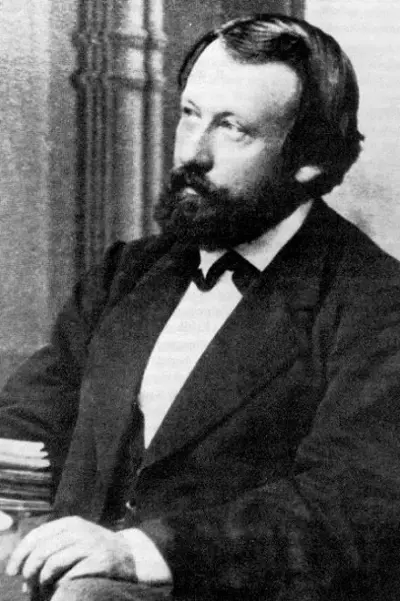
Wilhelm Dilthey was a German historian, psychologist, sociologist, and hermeneutic philosopher, who held G. W. F. Hegel's Chair in Philosophy at the University of Berlin. As a polymathic philosopher, working in a modern research university, Dilthey's research interests revolved around questions of scientific methodology, historical evidence and history's status as a science. He could be considered an empiricist, in contrast to the idealism prevalent in Germany at the time, but his account of what constitutes the empirical and experiential differs from British empiricism and positivism in its central epistemological and ontological assumptions, which are drawn from German literary and philosophical traditions.
