Judith Butler Quotes
Honestly, what can really be said about 'the Jewish people' as a whole? Is it not a lamentable stereotype to make large generalizations about all Jews, and to presume they all share the same political commitments?
Butler, Judith. "Judith Butler responds to attack: 'I affirm a Judaism that is not associated with state violence'." Mondoweiss, 27 Aug. 2012.


This was quite shocking to most Italians where Jews had been very assimilated for years and anti-Semitism was not as embedded in society as in Germany.

He and almost all of the Jews in Germany were expected to act like Germans. There was no room for maintaining and developing their own ethnic customs and traditions. When he arrived at New York, he was treated as a great celebrity by Mayor La Guardia, who was fluent in Yiddish, and other dignitaries some of whom were Jews and even met President Warren G. Harding. He lectured at City College and for the first time in his life saw Jews who had any distinguishing culture and customs—and the informality, egalitarianism, gregarious, free speaking, fun loving was just the opposite of the norms that he had grown up with in Germany which he did not like. See {640911}. He would later become a part of that culture and be seen as a leader, even being offered the Presidency of the new state of Israel in 1949.

The Turks had massacred the vast majority of their Armenian population, and treated the Greeks badly killing and them many of them from territories the Ottoman Turks had conquered. Jews fared better but were 2nd class citizens. Bristol was the American State Department’s senior official and was very “understanding” of the murders and ethnic cleansing despite the fact that President Wilson and most American politicians were very opposed to the Turkish massacres. See {620614} and {620599} . Two factors makes this quotation very significant. First, at the time the State Department was not really under the control of either the President or the Congress. It was not rare for the Department to have its own policies and implement them. This began to change in WWII and FDR exercised much more control than previous presidents since Theodore Roosevelt. The second factor is that there were many racists throughout the State Department—Bristol was only one. There was little concern for minorities’ welfare and the emphasis was on commerce. See {620600} Even in Truman’s administration, the President had massive opposition from the State Department for his policy of recognizing the State of Israel. Today, this kind of racism in the State Department is very rare, and human rights has been one of their major concerns. There were many changes in 75 years.


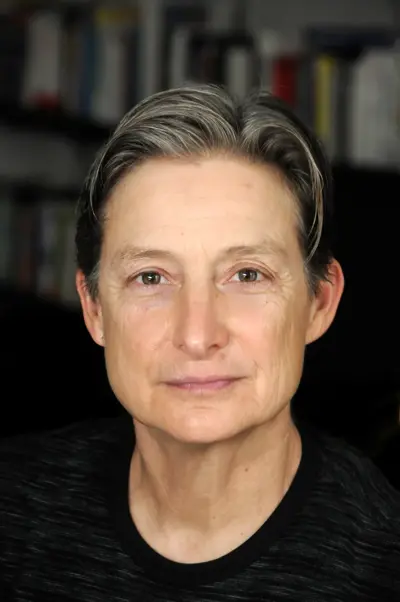
Judith Pamela Butler is an American philosopher and gender theorist whose work has influenced political philosophy, ethics, and the fields of third-wave feminist, queer, and literary theory. In 1993, Butler began teaching at the University of California, Berkeley, where they have served, beginning in 1998, as the Maxine Elliot Professor in the Department of Comparative Literature and the Program of Critical Theory. They are also the Hannah Arendt Chair at the European Graduate School.
