Rutger Bregman Quotes
History will tell you that borders are not inevitable, they hardly existed at the end of the 19th century.
Bregman, Rutger. Utopia for Realists: The Case for a Universal Basic Income, Open Borders, and a 15-Hour Workweek. Bloomsbury Publishing, 2017.


At the time, the major European countries were in a competitive scramble for colonies in Africa—so much so that there were very few independent territories left. The maps and borders of Africa were really decided by the Europeans.


He had modernized much of Egypt and now thought a partnership with Europe had materialized. Ever since, the role of Egypt vis a vis Europe and Africa, the Christian world and the Muslim one, has varied.


Despite the fact that there were no formal political polls at the time, public opinion was very influential in curtailing what might be a tendency to use of the American military. Starting with the Cold War later, Presidents tended to use American military force regardless of public opinion or would exaggerate or lie (Vietnam and Iraq wars for example) to temporally gain some public support.

De Gaulle tended to see world affairs in terms of extreme, simplistic, and dramatic alternatives when reality is much more complex the truth was turned out to be for England a much more favorable outcome without either of these extremes.


At the time France and Germany controlled different parts of the Ruhr Valley. Each believed that they should control it all and the other had no right to control any of it. This never did get settled and was one of the justifications Germany gave in WWII for invading the area. Haskins was one of only three assistants who were part of Woodrow Wilson’s team that negotiated the Treaty of Versailles ending WWI.
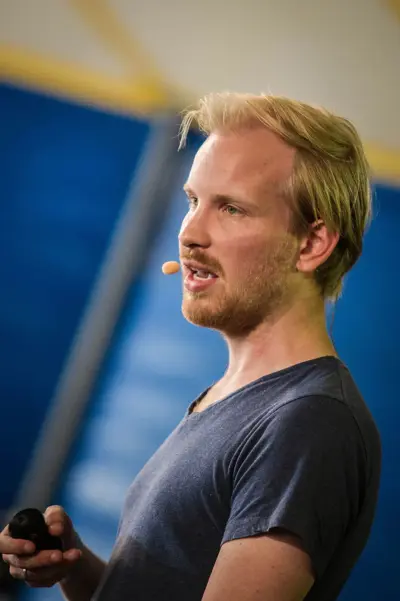
Rutger C. Bregman is a Dutch popular historian and author. He has published four books on history, philosophy, and economics, including Utopia for Realists: How We Can Build the Ideal World, which has been translated into thirty-two languages. His work has been featured in The Washington Post, The Guardian and the BBC. He has been described by The Guardian as the "Dutch wunderkind of new ideas" and by TED Talks as "one of Europe's most prominent young thinkers". His TED Talk, "Poverty Isn't a Lack of Character; It's a Lack of Cash", was chosen by TED curator Chris Anderson as one of the top ten of 2017.
