James Montgomery Beck Quotes
Hereafter when Congress wishes to pass a law which the Supreme Court might over- rule, it shall request the Supreme Court by a joint resolution, signed by the President, for an advisory opinion—or really an advance opinion. The Supreme Court in such a case would have a right to refuse. It could refuse if it believed it was being drawn into a partisan controversy. But, in uncontroversial questions, it could render great assistance.
Many other nations allow the Supreme Court to provide an “advisory” opinion, but in the United States, while the law does not prohibit this, the Supreme Court has always refused to render an opinion in the absence of a actual case.
James Montgomery Beck, 1861-1936, U. S. Congressman (Republican, PA), Solicitor General of the United States, Proposal he made to Congress when Solicitor General, 1924
Sourced by: Eigen's Political and Historical Quotations

Marshall is famous for, as Chief Justice, establishing the principle that the Judiciary can override Congress and the Executive in determining Constitutionality. However, as this quotation illustrates this principle had been discussed in open debate on the ratification of the Constitution. It was not simply a grab for power by a Chief justice; he uttered this quotation long before he ever suspected he would be a judge but actually spent much of his career in the executive and legislative branch of government.

Jefferson’s fears were later reinforced by John Marshall in Marbury v. Madison {606468}


The highest court in New York.

Hatch was the chairman of the Senate Judiciary Committee at the time.


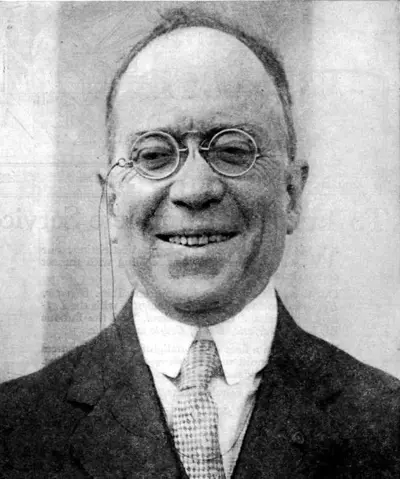
James Montgomery Beck was an American lawyer and politician from Philadelphia, Pennsylvania. He was a member of the Republican Party, who served as U.S. Solicitor General and U.S. Representative from Pennsylvania.
