John Keats Quotes
Health is the greatest of blessings - with health and hope we should be content to live.
Keats, John. Letter to Fanny Keats, 8 Feb. 1820. The Letters of John Keats: 1814-1821, edited by Hyder Edward Rollins, vol. 2, Harvard University Press, 1958, p. 253.


As hard as it is for us to imagine today, while her husband was President of the United States, the First Lady wrote a nationally syndicated newspaper column every single day with politics frequently the subject. While she usually agreed with the President, there were occasions where they seemed to not see things exactly the same. She tended to be more liberal than he. However, there were those who believed that when she criticized politicians, it was with FDR’s knowledge and blessing and she sometimes did his “dirty work.” Eleanor Roosevelt was one of the most influential people in the country—certainly more-so than any First Lady before and since.


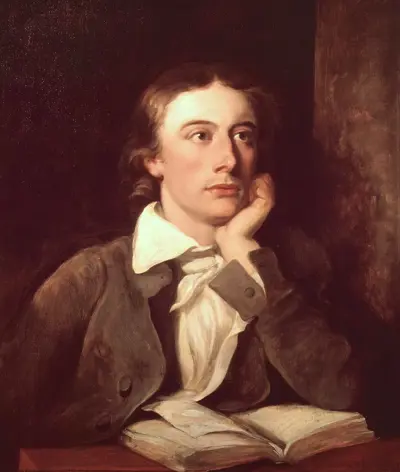
John Keats was an English Romantic poet. He was prominent in the second generation of Romantic poets, with Lord Byron and Percy Bysshe Shelley, though his poems were in publication for only four years before he died of tuberculosis at the age of 25. They were not generally well received by critics in his lifetime, but his fame grew after his death, and by the end of the century he had become one of the best beloved English poets, with a strong influence on many writers. Jorge Luis Borges called his first encounter with Keats' work an experience that he felt all of his life. It had a style "heavily loaded with sensualities", notably in the series of odes. It was typical of the Romantics to accentuate extreme emotion through emphasis on natural imagery. Today his poems and letters remain among the most popular and analysed in English literature. Especially acclaimed are "Ode to a Nightingale", "Sleep and Poetry" and the famous sonnet "On First Looking into Chapman's Homer".
