David Paulson Quotes
Having stovepipes—not sharing information—that was the main failure of FEMA in Hurricane Katrina.
David Paulson, Director of the Federal Emergency Management Agency, Interview, NBC Meet the Press, August 27, 2006
Sourced by: Eigen's Political and Historical Quotations

Unlike terrorism and natural disasters like earthquakes, a hurricane is known about a week in advance and can be tracked as it makes landfall. So his view was that the prime failure of FEMA and the Department of Homeland Security occurred the week earlier. In addition a few weeks before Katrina, Leibersbach lead a delegation of State Homeland Security Directors to meet with Secretary Chertoff of Homeland Security. Their message was that the reorganization of DHS has so downgraded FEMA that the nation’s capacity to deal with national disaster had been diminished as a result of the reorganizations.

This seems to hold in the private and the public sectors both.

This quotation shows the naivety of the Islamic terrorists about America. They assumed that because the Federal Government did not send help to New Orleans and other communities hit by the hurricane, it was because there was a shortage of military personnel to send and they took credit for tying down all the troops. They just could not accept the possibility that some American administrations were totally incompetent and were not be prepared or that an American President could appoint someone with no real qualification. Ironically, they would believe that of the Arab countries in the Middle East, but not the vaunted USA. The terrible response to Katrina had nothing to do with the shortage of troops and civilian first line responders. There were more than enough. They just were never prepared and never deployed on time.

New Orleans suffered Hurricane Katrina, and tens of thousands of citizens were endangered from first the floods and then starvation and dehydration. With the exception of the Coast Guard, the Federal response was meager and inadequate. FEMA and the National Guard took days to get deployed. Meanwhile, journalists in boats and vehicles actually rescued some of the people.

FEMA is the Federal Emergency Management Agency. President Bush appointed Mike Brown as the agency director, and after the agency debacle of New Orleans, he had to resign. Bush was not the only President who appointed people to federal jobs with little or no qualifications, however usually those are not the critical, front line jobs. However, the Senate confirmed Brown overwhelmingly, even with his lack of qualifications.


Thousands of people were trapped in the New Orleans convention center without food, water, sanitary or medical facilities. A number died. While the head of FEMA claimed Federal ignorance, the plight of the people at the Superdome and the Convention Center was constantly being broadcast on the radio and television, including on location video and pleas for help. Mr. Brown’s qualifications for emergency management before he was appointed to head FEMA was to head up an organization for Arabian Horses.

The George W. Bush administration had been caught ill prepared and with the exception of the Coast Guard, was slow and inadequate in responding to the emergency.


Compare this quotation with {632899}. Most members of Congress had limited management experience and the only solution to an organizational problem was to fire people. The referenced quotation has people fired for the purpose of inspiring public trust; in this quotation, it is to trigger reform and change. Ironically, there is no evidence in the management literature that suggests that firing for either of these reasons will have the desired objective.

Ironically it was the old Chinese culture of the Emperors where public official mistakes were generally paid for with the official’s life. However, there is a tendency the world over for the public to demand someone to be punished or fired. Often the easiest way for a politician with administrative responsibility to blunt that responsibility is to fire some subordinates or demote or otherwise punish them. In Taiwan they have a demerit system. The leader must take the responsibility for the failure. Many politicians (and business executives) observe that there are thousands of subordinates and that they cannot be held responsible for the errors that any of them make. While the do not want the responsibility, they are the first to claim the credit if anything goes right. If an employee should be fired, then do so, but as this quotation observes to meet out discipline in response to criticism is reprehensible.


Two of the 20th centuries greatest political leaders were Mao Tse-Tung and Franklin Delano Roosevelt. In most respects, these two were polar opposites. However, they had one characteristic in common. They were both willing to try things they were not certain of. If they succeeded, make it a part of the national program. If it failed, try something else. See FDR 52,743.

Puerto Rico was hit by a hurricane which had a devastating effect on the infrastructure of the island. Cruz, Mayor of San Juan, was frustrated when the Federal response from FEMA and the military was very slow to materialize.


Mead argues that this is a trend that has been operating over many administrations. It could be argued that modern communications and the media have been significant drivers of this phenomenon along with the desire for White House staff to have as much control as they can obtain. Before modern communications, an Ambassador, or a Secretary of Commerce had to make decisions within the philosophical and political umbrella of the President’s general policies. They could not communicate immediately with the President or his staff. But once everyone in the government was connected, the President’s staff could make every important decision. However, with the many different major issues and emergencies of the modern era, the small group in the What House have not been able to deal with them all and the bureaucracy has been instructed not to decide big things without going through the White House. See {642086}.
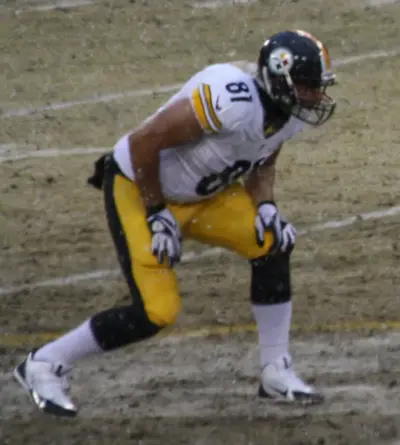
David Joshua Paulson is a former American football tight end. He was selected in the seventh round, 240th overall, by the Steelers in the 2012 NFL Draft. He played college football at Oregon.
