Martin Jacques Quotes
Google will be obliged either to accept Chinese regulations or exit the world's largest Internet market, with serious consequences for its long-term global ambitions. This is a metaphor for our times: America's most dynamic company cannot take on the Chinese government - even on an issue like free and open information - and win.
Jacques, Martin. "Google is Learning the Limits of American Power." The Guardian, Guardian News and Media, 14 Jan. 2010.


This seemingly logical inconsistency is actually typical of many nations and cultures that practice censorship. Freedom in this is a concept of a limited freedom—limited to what is reasonable, not harmful, not offensive. So all are free to behave within a circumscribed set of norms. By this logic, freedom is not being curtailed if the state acts to stop activity beyond those norms. Every nation accepts this principle to some extent. In America one “cannot should fire in a crowded theater” but there are very few other restrictions. But in Germany, Israel and other modern Industrial democracies there is censorship of material that promotes ethnic hatred whereas in the U. S. that is protected from censorship. In China many sites on the Internet have material that is regarded as inflammatory, or slanders the government and this is bad because people might lose confidence in their government. So freedom of speech and censorship issues are matters of degree with the United State being at one end of the scale and North Korea and Saudi Arabia being at the other end. China has been moving from the North Korean end of the scale towards the middle.


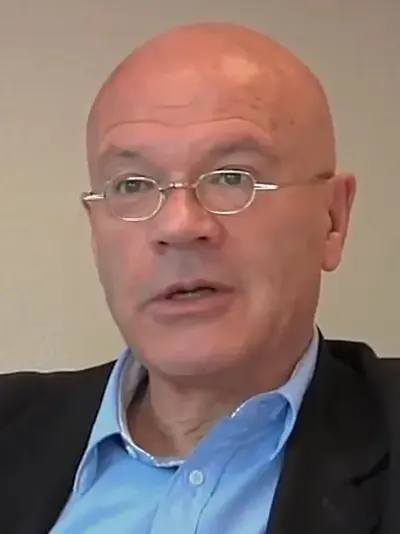
Martin Jacques is a British journalist and academic. Jacques was a member of the Communist Party of Great Britain, becoming, in his own words, "a member of its Executive Committee, probably the youngest member ever at about twenty-two". He was editor of the party's journal, Marxism Today, from 1977 until its closure in 1991.
