Andre Gide Quotes
From what mad optimism we descended. The Newspapers had done their job so well that everyone began to imagine that our army had only to show itself to put the entire German army to rout.
The French had also established what they believed to be a strong defensive line protecting France form German incursions. However, the Germans penetrated it relatively easily by going around the fixed installations and moved troops deeply into the heart of France. French men and women were shocked as they had believed their government’s propaganda, which had been supported by the “independent” press.
Andre Gide, 1869-1951, French Writer, 1914, Quoted in Max Hastings, Catastrophe: Europe Goes To War 1914, 2013
Sourced by: Eigen's Political and Historical Quotations

This quotation is of critical importance as it shows that the Germans were actually planning the First World War. See {642092} for another quotation on the subject.


George was referring to the brutal realities of war (during the First World War).

ignoring them and letting the pressure build, or denying them and taking the hit

This referred to ships being torpedoed by the German U-Boats in the poster.

The red scare was present in America only 2 years after the Russian Revolution. See {638530} for one of the reasons.

The French manipulated the war news more than the other nations but nations all did to some extent tending to exaggerate the positive and minimize the negative.

This was a Nationally Broadcast Speech speech in the run up to American entry to WWII, Lindbergh had been a national here for being the first aviator to fly over the Atlantic to Europe. Politically, the National Hero became an active fascist supporter of Mussolini and Adolph Hitler who awarded him a Medal for Supporting Fascism, Anti-Semitism and advocating for America to allow Hitler to conquer German and the rest of Europe. After WWII he was in disgrace. This quotation is one of his many attempts to keep America from interfering with Hitler in Europe as he was a great admirer of Fascism and the two leading proponents in Europe.


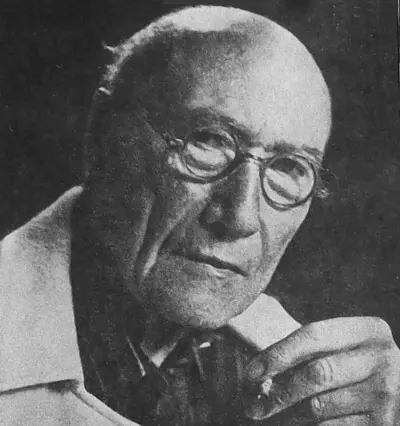
André Paul Guillaume Gide was a French author and winner of the Nobel Prize in Literature (in 1947). Gide's career ranged from its beginnings in the symbolist movement, to the advent of anticolonialism between the two World Wars. The author of more than fifty books, at the time of his death his obituary in The New York Times described him as "France's greatest contemporary man of letters" and "judged the greatest French writer of this century by the literary cognoscenti."
