William Shakespeare Quotes
Friends, Romans, countrymen, lend me your ears; I come to bury Caesar, not to praise him.
Shakespeare, William. Julius Caesar. Edited by Barbara A. Mowat and Paul Werstine, Simon & Schuster, 1992, act 3, sc. 2, lines 82-83.


Ryan told the national audience that President Obama had come to a factory in his district that as rumored to be closed. Obama had told the workers that the Federal government could assist and keep the factory open for many years. Then as Ryan explained, the factory closed the following year. He gave this as an example of Obama not keeping his word. However what Ryan did not say was that Obama had made the speech at the factory when he was a candidate for the Presidency, and then the factory was closed while George W. Bush was President and by the time he took office, the closure was done and the factory machines gone. And when Obama took office, our national economy was within days of complete bank and finance collapse. Obama saved most of the banks and then the American automobile industry. To suggest that Obama could have or should have done something for the factory that closed was shockingly misleading. It would have been a minor issue if some party hack had lied and made the same accusation. But this was the Vice Presidential Candidate whose acceptance speech was assumedly vetted by the Presidential Candidate’s staff. That is why the quotation was so memorable.


On February 25, 1820 Congressman Felix Walker, 1753-1828, (Democrat, NC), rose to make a speech on the Missouri Bill when all practical debate was over and the result was a foregone conclusion. He was urged by his colleagues to desist, but he persisted claiming he wanted to make a 'speech for Buncombe,' a county in his district.


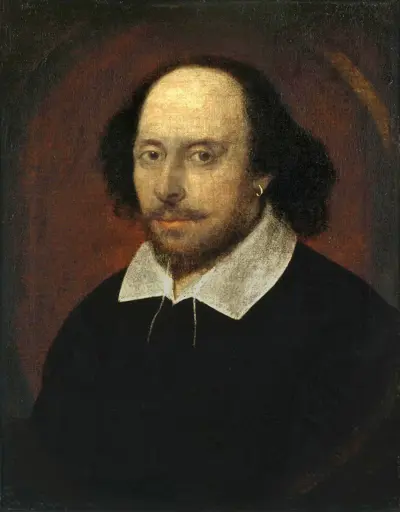
William Shakespeare was an English playwright, poet, and actor, widely regarded as the greatest writer in the English language and the world's greatest dramatist. He is often called England's national poet and the "Bard of Avon" (or simply "the Bard"). His extant works, including collaborations, consist of some 39 plays, 154 sonnets, three long narrative poems, and a few other verses, some of uncertain authorship. His plays have been translated into every major living language and are performed more often than those of any other playwright. They also continue to be studied and reinterpreted.
