Thomas P.M. Barnett Quotes
Frankly, the only thing China has in easy abundance is people and dirty coal. Neither is the asset they're made out to be.
Barnett, Thomas P.M. Great Powers: America and the World After Bush. G.P. Putnam's Sons, 2009.


Many argue that they are hardly reflected at all. The reason is the governments pay for much of the real cost and spread the cost over its taxpayers. Some costs are not monetary—premature deaths from pollution or corruption in petroeconomic corrupt states. People just suffer.


This quotation became a slogan of the miners. Lewis did not originate it. It has been referred to as early as 1902 in the bitter coal strike of that year. Generally coal mining strikes have involved more force and military than most labor disputes. While labor representatives maintain that force does not help, mine owners have believed that force is absolutely necessary. See Richard B. Mellon’s testimony to Congress in 1937--{563576}.


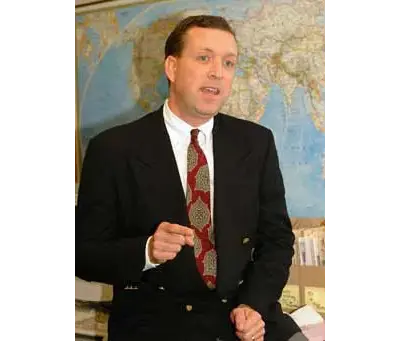
Thomas P.M. Barnett (born 1962) is an American military geostrategist and former chief analyst at Wikistrat. He developed a geopolitical theory that divided the world into "the Functioning Core" and the "Non-Integrating Gap" that made him particularly notable prior to the 2003 U.S. Invasion of Iraq when he wrote an article for Esquire in support of the military action entitled "The Pentagon's New Map" (which would later become the title of a book that would elaborate on his geopolitical theories). The central thesis of his geopolitical theory is that the connections the globalization brings between countries (including network connectivity, financial transactions, and media flows) are synonymous with those countries with stable governments, rising standards of living, and "more deaths by suicide than by murder". These countries form the Functioning Core. These regions contrast with those where globalization has not yet penetrated, which is synonymous with political repression, poverty, disease, and mass-murder, and conflict. These areas make up the Non-Integrating Gap.
