Socrates Quotes
Four things belong to a judge: to hear courteously, to answer wisely, to consider soberly, and to decide impartially.


Most Americans would with this characterized their own judges. This is the most formalized and sophisticated compendium of laws of the so-called “barbaric peoples” of Europe. The compilation was in many ways a documentation of the traditional laws of the Visigoths that had evolved over hundreds of years.

The papyrus appears to be an instruction booklet for government officials.


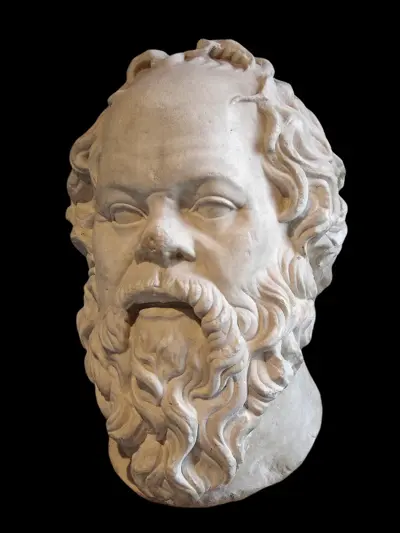
Socrates (/ˈsɒkrətiːz/; Ancient Greek: Σωκράτης Sōkrátēs [sɔːkrátɛːs]; c. 470 – 399 BC) was a Greek philosopher from Athens who is credited as one of the founders of Western philosophy, and as being the first moral philosopher of the Western ethical tradition of thought. An enigmatic figure, he authored no texts, and is known chiefly through the accounts of classical writers composing after his lifetime, particularly his students Plato and Xenophon. Other sources include the contemporaneous Antisthenes, Aristippus, and Aeschines of Sphettos. Aristophanes, a playwright, is the main contemporary author to have written plays mentioning Socrates during Socrates' lifetime, although a fragment of Ion of Chios' Travel Journal provides important information about Socrates' youth.
