Oxford English Dictionary Quotes
Foreigner: A person whose native language is not English.
This quotation illustrates the extreme cultural chauvinism of which the English were capable. This definition was not the primary definition but it was one of the popular English uses of the word. The French had a similar linguistic egocentrism.
Oxford English Dictionary, Definition of “foreigner”, 1974
Sourced by: Eigen's Political and Historical Quotations


Dwight and many other leading clergy and intellectuals of the day were horrified by the French Revolution, enlightenment liberalism and were paranoid about the "Illumnati" a secret society who were–according to the conspiracy theory–responsible for most wars and depressions in the world who would debauch American daughters. The Illuminati were secretly trying to take over the world's economic and political power structure. To this day, there are some who believe that the Illumnati today control the UN and major multinational corporations and are the New World Order. He believed that Thomas Jefferson and the Democratic Republicans were already instruments of the Illumnati. He repeated this theme in his election sermon 2 years later in 1798. See {18125}.


He was one of the authors of the Bi-Lingual Education Act, but the nature of the program changed much from the original intent.


The senator later apologized for this remark.

Most immigration reformers want to open immigration more widely. Ward wanted immigration restricted to certain ethnicities and limited. Essentially, this was code for anti-Catholicism and anti-Semitism. The immigrants that he described as not being “helpful” have made some of the greatest contributions to America. One element of the immigration debate that is illustrated by this quotation is whether the United State should be homogeneous or heterogeneous. It has been the latter and that has brought the best of cultures of the world to the United States which has constantly been shaped by its immigrants even as it shaped and assimilated the immigrants.


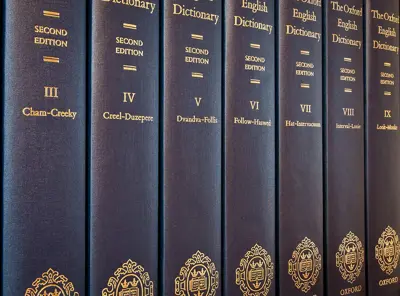
The Oxford English Dictionary (OED) is the principal historical dictionary of the English language, published by Oxford University Press (OUP). It traces the historical development of the English language, providing a comprehensive resource to scholars and academic researchers, as well as describing usage in its many variations throughout the world.
