Samuel Johnson Quotes
For gold the hireling judge distorts the laws.
Johnson, Samuel. The Vanity of Human Wishes: The Tenth Satire of Juvenal, Imitated. R. Dodsley, 1749.


This is the earliest surviving attempt of the Romans to formulate a legal code.


Adopted by the original Edinburgh Review Magazine as its motto.


Her co-leader, Martin J. Healy, was accused of accepting a bribe from a judge in exchange for his appointment. What makes this quotation particularly interesting is the fact that she was speaking before a reform organization, yet it is clear that Mathews herself saw no immorality in party officials accepting kickbacks. One of the major problems in reform was that most of the Tammany Hall leaders and voters had a different morality from the reformers and many genuinely thought that the situation as it existed was only “fair.” Reform, as with civil rights, required a transformation of public opinion and sense of right and wrong. See {626674} for one of her solutions to political corruption.
The bill went down to a narrow defeat, but the Republican leadership of the House held the vote open for a record setting 3 hours, until they could persuade enough members to reverse their vote. After the 3 hours, the bill passed by one vote. The House Ethics Committee did not see that as sufficient reason to start an ethics investigation.


Eight of the Chicago Mayor’s cabinet had been indicted for corruption. Chicago had historically “looked the other way” when there was corruption but this time Emanuel and the Mayor Richard M. Daley have taken a more strict approach.


“Magistrate” has the meaning of leading public official of an area. Mayors are often called the Chief Magistrates of the city, for example.

This is one of the proverbs of King Solomon of the Jews, son of King David.
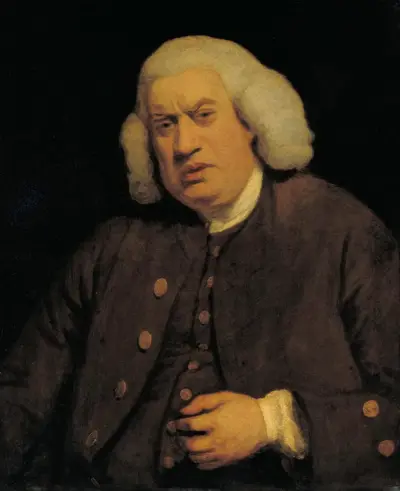
Samuel Johnson, often referred to as Dr Johnson, was an English writer who made lasting contributions to English literature as a poet, playwright, essayist, moralist, literary critic, biographer, editor, and lexicographer. Religiously, he was a devout Anglican, and politically a committed Tory. The Oxford Dictionary of National Biography describes Johnson as "arguably the most distinguished man of letters in English history". He is the subject of James Boswell's The Life of Samuel Johnson, described by Walter Jackson Bate as "the most famous single work of biographical art in the whole of literature".
