Ayn Rand Quotes
For centuries, the mystics of spirit had existed by running a protection racket - by making life on earth unbearable, then charging you for consolation and relief, by forbidding all the virtues that make existence possible, then riding on the shoulders of your guilt, by declaring production and joy to be sins, then collecting blackmail from the sinners.
Rand, Ayn. Atlas Shrugged. Random House, 1957.


This text, generally considered the most important of all the Hindu works is believed to be the guidance given by Lord Krishna, the most important of the God figures, to has friend and devotee Arjuna. It originally was an episode of the enormous Mahabharata, the history of the ancient world written originally in Sanskrit. The date is approximate and different scholars have dated it from 500 BC to 50 BC. The Bhagavad Gita is generally regarded as the most concise description of Hindu philosophy. For some religions, fighting and war is not only permissible but can be a religious duty. Islam has the same notion. Christianity in contrast has had more of a theological struggle with war as a duty and even had to develop the concept of a “just war” to make fighting morally permissible. But this compunction, also shared with Buddhists and Bhai for example, is by no means universal. When religious Muslims fought religious Hindus as they have for over 1000 years, it is particularly difficult even today to make peace as so many on both sides see the battle as a religious duty.

Francis of Assisi


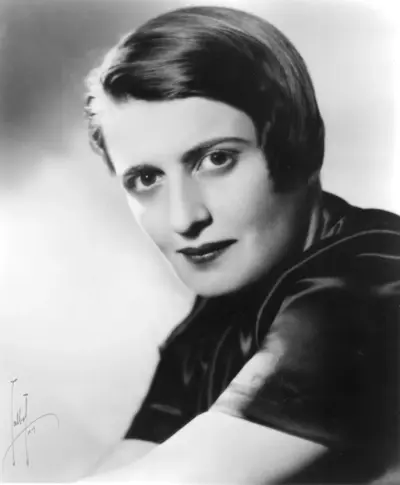
Ayn Rand was a Russian-American writer and philosopher. She is known for her two best-selling novels, The Fountainhead and Atlas Shrugged, and for developing a philosophical system she named Objectivism. Born and educated in Russia, she moved to the United States in 1926. She had a play produced on Broadway in 1935 and 1936. After two early novels that were initially unsuccessful, she achieved fame with her 1943 novel, The Fountainhead. In 1957, Rand published her best-known work, the novel Atlas Shrugged. Afterward, she turned to non-fiction to promote her philosophy, publishing her own periodicals and releasing several collections of essays until her death in 1982.
