C. L. R. James Quotes
First of all, Bolshevism represents revolution and the revolutionary struggle.
James, C. L. R. World Revolution, 1917-1936: The Rise and Fall of the Communist International. London: Martin Secker & Warburg, 1937.


Advocating a revolution against the Karenski provisional government: Vladimir Lenin


In 1921 an Paul E. De Mott, an American Quaker famine relief worker in Germany was arrested as a "Bolshevik" and murdered without trial. American correspondents heard about the crime and asked for a statement from the chief American diplomat in Germany.

The headline was an eyecatcher. The small type went on to say that all kinds of germs and other things can grow in a washroom if everything is not kept dry. At the time there was a national fear of anarchists and we were in the midst of a red scare.


The “October Revolution” was the Russian Revolution of 1917.


After the 1917 Russian Revolution many of the Western Countries sent troops to Russia where they aided the Whites against the Reds. When the Red Bolsheviks prevailed, there were many attempts to diplomatically and economically undermine the Communist government. This caused a unity among different Russian factions. Sforza urged leaving them alone and letting the Bolsheviks fail by their own ideology. Most Western nations and the United States did not agree with him.


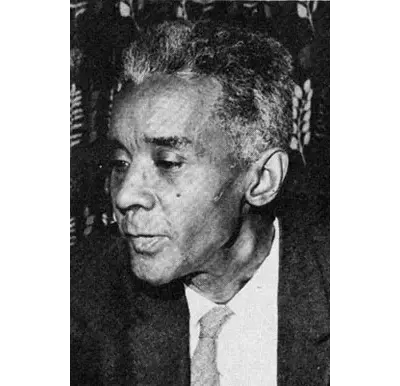
Cyril Lionel Robert James, who sometimes wrote under the pen-name J. R. Johnson, was a Trinidadian historian, journalist and Marxist. His works are influential in various theoretical, social, and historiographical contexts. His work is a staple of Marxism, and he figures as a pioneering and influential voice in postcolonial literature. A tireless political activist, James is the author of the 1937 work World Revolution outlining the history of the Communist International, which stirred debate in Trotskyist circles, and in 1938 he wrote on the Haitian Revolution, The Black Jacobins.
