Franz Kafka Quotes
Every revolution evaporates and leaves behind only the slime of a new bureaucracy.
Janouch, Gustav. Conversations with Kafka. Translated by Goronwy Rees, New Directions, 1971, p. 120.


Vladimir Lenin


In 1927 there was a Peasant Uprising in the Hunan Province of China. Young Mau went there and wrote a report. Corruption has plagued China for millennia. As can be seen by this quotation, Mao thought that a “people’s revolution” would end corruption and despite capital punishment for corruption under the Communist government, corruption still thrived. By the 21st century corruption was common among local Communist Party Officials despite national party and government attempts to obliterate it.


Harding, not the most historically knowledgeable of American Presidents, had forgotten the revolutionary origin of the United States or its drastically experimental nature. It was the fear of Communism and the Russian Revolution that gave revolution a bad name at the time.

He was referring to the public unrest and dissatisfaction when an middle, poor or impoverished class is ground down by rigid interpretation and contract laws so that people in debt can rarely get out. He argues that this was a stark reality before most revolutions and a primary cause.
Honore Gabriel Victor Requiti


Samuel Langhorne Clemens, 1835-1910

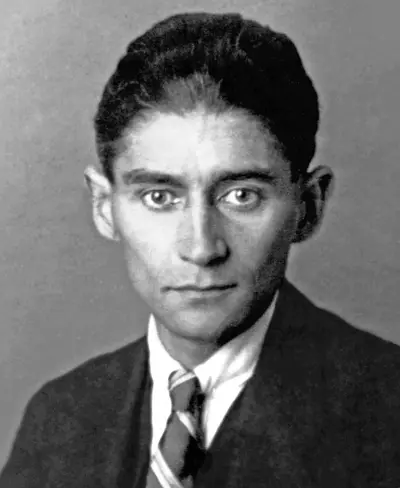
Franz Kafka was a German-speaking Bohemian novelist and short-story writer, widely regarded as one of the major figures of 20th-century literature. His work fuses elements of realism and the fantastic. It typically features isolated protagonists facing bizarre or surrealistic predicaments and incomprehensible socio-bureaucratic powers. It has been interpreted as exploring themes of alienation, existential anxiety, guilt, and absurdity. His best known works include "Die Verwandlung" ("The Metamorphosis"), Der Process (The Trial), and Das Schloss (The Castle). The term Kafkaesque has entered the English language to describe situations like those found in his writing.
