Bernhard Dernburg Quotes
Every 8-hour day is a nail in Germany’s coffin!
Germany was in a terrible recession with hyper inflation. The industrialists and the government wanted to roll back the 8-hour work day that had recently been won in many German industries. The logic of the Finance Minister was that no one would invest new capital in Germany, yet Germany needed capital to grow to the level where it could be stable again. Therefore, if the German workers were to work an additional two hours every day without compensation, there was a way to turn that into capital. Of course none of the wealthy Germans would sell off some of their lands, estates, and factories and give that money to the Government and didn’t want to pay more taxes. The burden of recovery would be borne by the German workers. See {590485}.
Bernhard Dernburg, 1865-1937, German Vice Chancellor & Finance Minister, Statement, October 1922
Sourced by: Eigen's Political and Historical Quotations

Germany was in a terrible recession with hyper inflation. The industrialists and the government wanted to roll back the 8-hour work day that had recently been won in many German industries. The logic of the Finance Minister was that no one would invest new capital in Germany, yet Germany needed capital to grow to the level where it could be stable again. Therefore, if the German workers were to work an additional two hours every day without compensation, there was a way to turn that into capital. Of course none of the wealthy Germans would sell off some of their lands, estates, and factories and give that money to the Government and didn’t want to pay more taxes. The burden of recovery would be borne by the German workers. See {590486} .


Unmindful of the steady economic prosperity during the 1920s in America, Comintern “assured” American Communists that the economic growth was about to make an abrupt U-turn.


At the height of the depression the President actually told the people on nationwide radio that American unemployment was worse than any other country in the world. Few politicians since have ever been so candid with bad news for which the administration could partially be blamed. But Roosevelt needed the confidence and good will of the people over the long haul because there were no quick fixes. Therefore he assiduously personally told the people the truth about the conditions that existed. He did build that trust with candor and deep commitment to try things until something worked. Few Presidents since have been that honest with bad news, and few Presidents since have had the support of the electorate while he was working the problem.

At the time Vidal, who shared this view with many economists, had no inkling of the digital revolution that the PC and Internet would bring, nor the other phenomena that eliminated the need for cheap labor — robotics and offshoring. Nor could he have foreseen the development of fracking making America virtually energy independent as it was before WWII. It appears that the problem has shifted from Vidal's issues, to that of what do we do with the American citizens who do not have advanced skills nor do we have methods of educating them and training them to this level. The quotation illustrates that it is always difficult predicting the future, but particularly hazardous when it comes to economics.


Ironically, Fitzhugh who detested socialism, held this basic socialist principle. His solution however, was that the profits were necessary for society, and therefore slavery was the solution for Blacks AND whites.


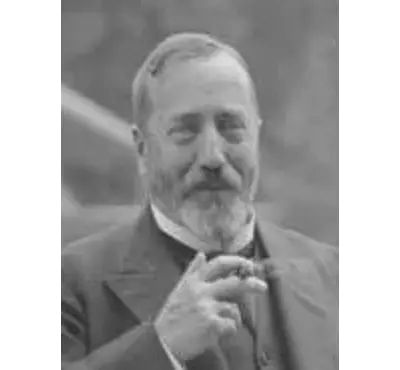
- Born: July 17, 1865
- Died: October 14, 1937
- Nationality:
- Profession:
Bernhard Dernburg was a German liberal politician and banker. He served as Secretary for Colonial Affairs and head of the Imperial Colonial Office from May 1907 to 9 June 1910, and as Federal Minister of Finance and Vice Chancellor of Germany from 17 April to 20 June 1919.
