Edwin Meese Quotes
Even the animal inspectors of the Department of Agriculture have a badge and carry a gun. Everyone wants a badge and a gun. Then they want arrest powers. Then, red lights on their car, and finally they want law enforcement retirement benefits …. It’s hard to find all the people in the federal government who have badges and guns.
Edwin Meese, U. S. Attorney General (Republican), American Bar Association Forum of Former Attorneys General, C-SPAN, November 25, 1999
Sourced by: Eigen's Political and Historical Quotations


Gates believed that ideally the government would have the trust of the people to access critical data, but that at the moment there are many who do not trust the government. Unfortunately, the FBI on many occasions have themselves broken the law and targeted people who had political and social viewpoints of which the FBI leadership did not approve. The CIA has on many occasions violated the law and repeatedly lied to Congress and even Presidents. The National Security Agency has also, in its zeal to carry out its mission skirted the law and the Director of National Intelligence blatantly deceived Congress and was exposed by the Snowden releases. Gates was an optimist and thought that the government could regain the necessary trust to allow it to have access to virtually all data in order to best protect society from things like terrorism with biological weapons.


His plan was that at the end of WWII, the 4 nations would police the world to be sure that the “4 Policemen” would be sure that no other Hitler could ever even start to invade neighboring countries. Ironically, he strongly suspected that the Nationalist Chinese would not be able to do this for the Pacific and assumed that the US would have to carry that area as well, but he didn’t doubt the ability of the Russians to police Eastern Europe but didn’t suspect that it would be Russia herself who militarily and covertly would encroach on other Eastern European countries.

1st Baron Macaulay

Police have been exceeding their authority under the law of the land for centuries in most nations. In the century that has passed since she wrote this quotation, there have been many reforms in American law enforcement. The situation is better but many police still exceed their authority. For centuries, most politicians have not wanted to curtail or restrict the police regardless of their human rights abuses, and most citizens did not realize the extent of police abuse. Modern media policies and technology has shed much light on the problem.

This statement by the police commissioner was very controversial as a major form of police brutality at the time was clubbing citizens with their nightsticks which were much larger and heavier than those used today. However the effect on the police officers was to green light heavy use of the nightstick and soon there was a major incident where the police badly beat many innocent citizens in their quest to control and punish alleged leftists. Whalen was forced to resign. See {626664} and {626663}.


Perez was a virulent racist who was the strongest political boss in Louisiana. Perez wanted to maintain segregation despite any Federal Court orders, and if the Federal Government would send Federal Marshalls or Federal Troops to enforce desegregation court decision, he would have the Louisiana State Police keep them out or the state, even if it came to a shooting battle. The Governor used this quotation to talk him out of the idea.

From the very beginning of the country, some states reserved the job of policing the state to the state as opposed to the Federal Government and would not countenance federal police, and there really were not any until the FBI was created in the 20th century. Still unlike any other country, the Federal government has minimal policing power. The FBI is very small—so small that it is smaller then one of the three shifts of the New York City police department.

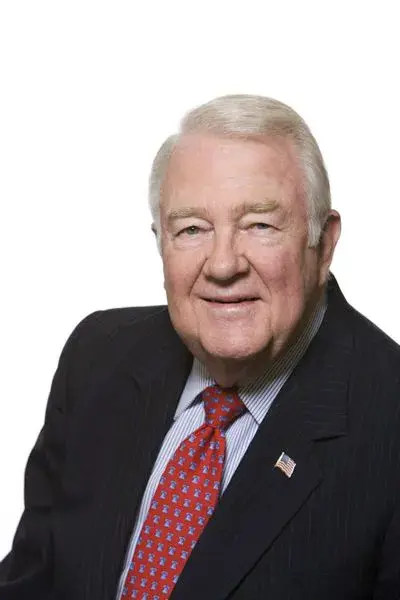
Edwin Meese III is an American attorney, law professor, author and member of the Republican Party who served in official capacities within the Ronald Reagan Gubernatorial Administration (1967–1974), the Reagan presidential transition team (1980–81) and the Reagan White House (1981–1985), eventually rising to hold the position of the 75th United States Attorney General (1985–1988), a position from which he resigned following the Wedtech scandal.
