John Sergeant Wise Quotes
Even if my mother had no qualms of conscience concerning ownership of negroes, her sense of duty carried her far beyond the mere supplying of their physical needs, or requiring that they render faithful service.
Wise, John Sergeant. The End of an Era. Houghton, Mifflin and Company, 1899, p. 35.


As an entertainer she had toured much of the world and seen American slavery and that of some other nations. She became a staunch abolitionist and like entertainers in the 20th and 21st centuries she used her celebrity to give anti-slavery lectures and perform for audiences where she donated the proceeds of the event to the abolition cause. She is a particularly interesting political figure in that she seems to be one of the first entertainers to perform for a social cause and become an activist.


Although Wedgwood was a business man and ceramic manufacturer, he was a staunch abolitionist. He made these medallions by the thousands and gave them to all who would receive them. The text became the motto of the anti-slavery society. It was one of the first examples of a logo – a symbol for a political cause being very effective.

Jefferson was an enigma with respect to slavery. Whereas he always abhorred it in his writings, and argued for an end to slavery, he maintained slaves himself and never did free them, unlike Washington, who spoke on the subject much less, but left orders in his will that all slaves were to be set free.

Jefferson was one of the early observers that the the institution of slavery corrupted and depraved the whites.

This was part of his presentation to Northern influential business men showing them what he claimed was the New South. He was particularly complimentary about the negro Christian viewpoint that inhibited revenge or retaliation for their terrible treatment. The favorable lines about Negroes were well received by Northerners. However, they were mostly unaware of his racist views he expressed when in the South. See Quotation 643649.


Grimke was the daughter of a prestigious, wealthy, slave owning, Southern Family from Charleston, and this letter was the first from anyone of the establishment of the South which favored abolition. It shook the Southern establishment to the core.

Parker and other escaped slaves in Christiana fought off slave catchers and killed the slave owner leading them. Charged with treason, he escaped to Canada with his family and lived there the rest of his life. While not a polished writer, after he himself had escaped and went to Christiana and leaned to read and write. He wrote this narrative of his life as a slave—one of the few written works we have from slaves.

Even before we had a Constitution there was major opposition to slavery. The “price” of the American Union was the acceptance of the slavery of the South. But the hypocrisy of a country based on liberty to allow and enforce slavery was not lost on the founding fathers. Ironically the abolitionists among the founding fathers were certain that they could persuade the Southern slaveholders of the error of slavery in a few years and things would be set right in the land. Even George Washington {630626}, and Thomas Jefferson and some other slaveowners at the time wished to see its abolition. Slaveholding Southern Founding Fathers in general were so wary of the abolitionists that they achieved structural, disproportionate, power in the new Constitution to ward off the abolitionists attempts to reform slavery.

She was one of the early abolitionists. Despite the Southern attempted repression of information of slave resistance, some of the facts emerged and were well known in the North. The South tried to suppress these incidents lest other slaves get ideas from it. Also the Southerners often maintained that Africa was so primitive and underdeveloped, that the slaves were better off in America; these actions of rebellion belied this notion.

Many historians point to this quotation as demonstrating Jefferson’s antipathy to slavery. However, others, more cynical, observe that by curtailing the ability to bring new slaves into Virginia, the economic value of the slaves who already existed increased markedly, First because there was a limited supply and a growing economy, but more important because the slave owner could breed and sell slaves from the existing stock he had. Jefferson was very aware of this economic fact, had worked out the mathematics and economics, and even advised friends to take advantage of it. See {629765}. Jefferson’s view of slavery was very complex and ambivalent.


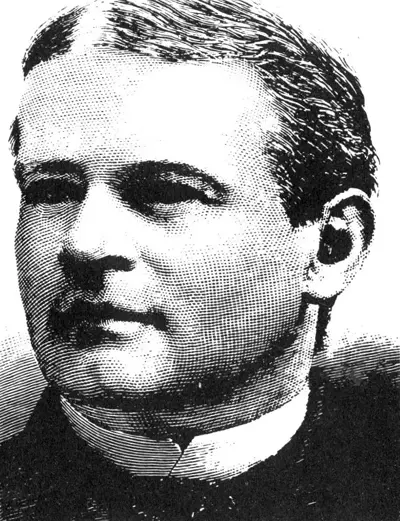
John Sergeant Wise was an American author, lawyer, and politician in Virginia. He was the son of Henry Alexander Wise, a Governor of Virginia, and Sarah Sergeant.
