Ruth Bader Ginsburg Quotes
Eight, as you know, is not a good number for a multi-member court.
Ginsburg, Ruth Bader. Remarks. American Constitution Society National Convention, 11 June 2016, Washington, D.C.


No other religion has ever preached majority rule so clearly and unambiguously. Because of this strong democratic philosophy, some dictatorial governments see the Bahai as particularly dangerous. Also some religions who see their doctrine and the world of God as being always right and the majority of people should not determine morality are even law. They recognize a higher power. Iran, in particular, has been a terrible persecutor of Bahai, their largest religious minority, which is the antithesis to the concept of a theocracy and at the opposite end of the religious spectrum from Islam. Bahai leaders had been executed. Bahai there are not allowed to attend higher education institutions, build religious facilities, preach openly or serve in many roles. See {614912}.


Dean was the counsel to President Nixon and was the point man in getting the nomination confirmed. There was some evidence that Rehnquist might have lied earlier in his career, that several senators wanted to inquire about. Nixon, Dean and the White House Staff pushed the nomination through on a partisan vote without any inquiry into the matter.
In 1964 Canada stood at a crossroads. a serious political movement dedicated to separation had formed in Quebec. . A terrorist group, the Front de Liberation du Quebec (FLQ.) was at work. The response of Prime Minister Lester Pearson was to create a bipartisan bicultural Royal Commission on Bilingualism.


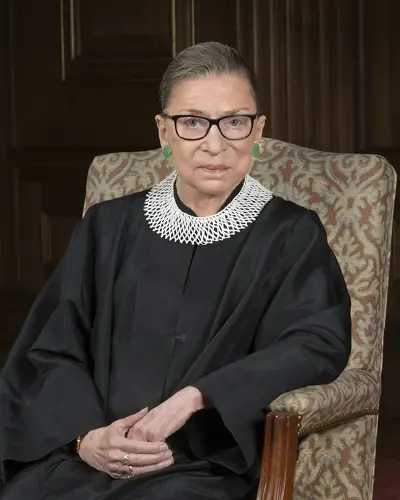
Joan Ruth Bader Ginsburg was an American lawyer and jurist who served as an associate justice of the Supreme Court of the United States from 1993 until her death in September 2020. She was nominated by President Bill Clinton, replacing retiring justice Byron White, and at the time was generally viewed as a moderate consensus-builder. She eventually became part of the liberal wing of the Court as the Court shifted to the right over time. Ginsburg was the first Jewish woman and the second woman to serve on the Court, after Sandra Day O'Connor. During her tenure, Ginsburg wrote notable majority opinions, including United States v. Virginia (1996), Olmstead v. L.C. (1999), Friends of the Earth, Inc. v. Laidlaw Environmental Services, Inc. (2000), and City of Sherrill v. Oneida Indian Nation of New York (2005).
