Steven Rattner Quotes
During my 30 years on Wall Street, taxes on 'unearned income' have bounced up and down with regularity, and I've never detected any change in the appetite for hard work and accumulating wealth on the part of myself or any of my fellow capitalists.
Rattner, Steven. Opinion piece. The New York Times, 2012.


The debate over whether taxes that paid on stock market and other investment profits should be at the same rate as taxes paid on salaries or other earned income has been going on for many years. It usually plays out in an argument that capital gains taxes should be at a lower rate than regular income taxes. Policy on this issue has gone back and forth.


The tax rates on income from working is much higher than on income generated from money which is invested. The reason for this is that the government wants economic growth and lowering the tax rate on investment profits will produce more investment which theoretically creates more jobs and strengthens the economy. However, most workers have no choice about whether they have to work. Lowering their tax rate will not induce them to work more. This not only produces a patently unfair burden on the worker compared to people who have capital to invest—usually among the wealthiest Americans. Another problem is that there are many forms of investment that does not produce any benefit for the United States. Many people invest in overseas banks, non American companies. These we tax at a low rate and all the benefits of the investment go to the foreign country.


This is a very important economic-political quotation. One conservative mantra in the 20th and 21st centuries was that business growth and development will be spurred by tax cuts in the marginal tax rate that the businessperson would have to pay. “Marginal” means the additional tax for each additional dollar of income. However, the development and growth of most businesses, especially the entrepreneurial ones that tend to create the most new high wage jobs. Bill Gates, Henry Ford, Steve Jobs, Thomas Watson Jr. and other creators of great business enterprises, in general do not even consider their potential profit as the most important reward. They are almost always on a mission to change the way people function in the world. They generally want to make money but the driving factor is really the change in society that they will produce. While Gates and other great business creators do not change their business behavior on the bases of marginal tax rates (or any other kind to tax rates for the matter), the 2nd and 3rd generation of business manager who takes over existing companies is motivated in great part by marginal tax rates. Summers and many others argue that not only are the best jobs created by those who are unmotivated by tax rates, but they are the same businesses that tend to produce most of the great innovations of society. Therefore, find other ways to incentivize the entrepreneurs rathefr than marginal tax rate policy.

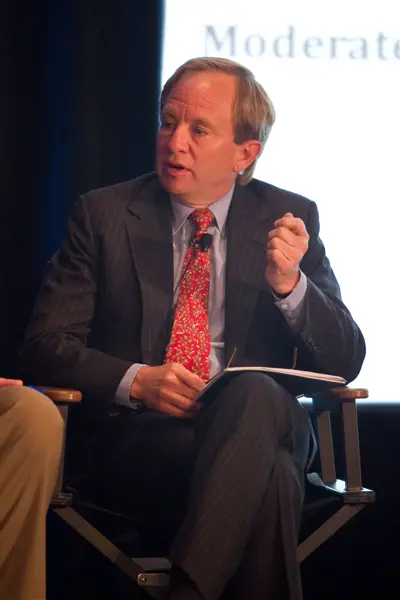
Steven Lawrence Rattner is a New York investment asset manager who served as lead adviser to the Presidential Task Force on the Auto Industry in 2009. He is currently chairman and chief executive officer of Willett Advisors LLC, the private investment group that manages billionaire former New York mayor Michael Bloomberg's personal and philanthropic assets. He continues to be involved in public policy matters as the economic analyst for MSNBC's Morning Joe, and as a contributing opinion writer for The New York Times op-ed page.
