Muhammad Quotes
Disbelievers cause confusion and corruption in the land.
This sura is used by fundamentalist Islamic regimes to justify religious persecution and prohibit any public worship other than Islam. Jews and Christians went through this stage and there are still a few fundamentalist extremists who would deny freedom of religion if they could. While the percentage is small, those in Islamic nations are a much larger proportion of the whole.
Muhammad, 571-632, Prophet and Founder of Islam, Koran, Sura 8:73
Sourced by: Eigen's Political and Historical Quotations

These suras are ones that for some fundamentalist extremists justified the killing of Iraqis Muslims who worked with the British, Americans or other Coalition forces in the Iraq war or even politicians who cooperated with the coalition.
This sura is interpreted in two ways. For many modern Muslims it means that in discussions and debates on religion with non-Muslims, do not back off, and if you do it is a religious transgression. Defend the faith. For the fundamentalists and extremists, they interpret the same sura in physical warlike terms. So if there is a fight or battle with disbelievers, retreating from the battlefield is not only cowardice and perhaps a crime under military regulations as it is in the West, but it is in Christian terms a mortal sin for which there one will go to hell. So the most religious of Muslims will fight to the death using this sura as their guidance. On the other hand, Muhammad himself as the military and civil leader of Islam made strategic retreats. In the history of almost all warfare between the West and Muslims—especially the Arabs—courage on the battlefield has been lacking and the Israelis, British, French, Americans, and Hindus of India all observe this military weakness and accounting for this is built into their military doctrine.
This sura poses a particularly distressing problem to many Islamic theologians and leaders. Since the closing of Islam in the Middle Ages, the Muslim world has not been as successful as has that of those that they would call disbelievers. But disbelievers were not to be successful. To rationalize this with the reality of history they speculated: What the West has achieved is not success. Evil corrupt rulers of Islamic nations have been holding the Islamic countries back. Islamic nations are punished by Allah because they have not spread Islam as Allah commanded. The barren traditional Islamic lands do not allow development and competition in the world. The latter a major reason there is so much enmity towards Israel and Turkey. The Turks who have become secular and the Israelis who were Jews both developed modern industrial countries without oil. The disbelievers had been extremely successful and this was not only a humiliation but threatened the understood integrity of Islam.
Essentially such a rigid conviction of unbelievers was common with both Protestants and Catholics in the middle of the second millennium, but Christian theology evolved and forgiveness and repentance became major factors. Islam did not so modernize so even in the 21st century a disbeliever deserved nothing from Muslims because Allah would never forgive them and they would be consigned to hell. So this Sura and {584363} made fundamentalist Muslim terrorists particularly willing to kill non-believers.
The Islamic Holy Book even recommends against friendships with Christians and Jews. See {584381}.
While moderate Muslims interpret this sura as meaning that theologically, a belief in the divinity of Christ is inconsistent to Islam, extreme fundamentalists take this to indicate that Christians are heretics and should be executed in accordance with Sharia – Islamic Law.
If some Islamic cleric declares a war or dispute to be an attack on Islam, the penalty is indeed severe for those Muslims who do not join the fight. In some Islamic lands, unbelievers are put to death. Note that the children become the Islamic society’s hostages for the behavior of the father.
Christian sentiments like this were common during The Crusades where God would cause Christianity to prevail. However, with the Reformation, the enlightenment, the industrial revolution, and modernity, most Christians became more tolerant of other religions and accepting of the fact that there are other religions, which while not valid, would co-exist with Christianity. Islam backward and left out of the forces that modernized Christian nations entered the 21st century with large numbers of Muslims who believe in the literal truth of this sura and its desirability and their personal duty to help make it happen.


See {608419}, {604665} and {604664} regarding the government’s destruction of Buddist statues.


This article was originally directed against non-Muslim religions who actively sought to convert Muslims. However, Islamic organizations, have also historically made their greatest inroads with the poor and ignorant members of a society. The madrassas of Pakistan, the activities of Hezbollah, in Lebanon, and Hamas in Gaza all have common characteristics with the Salvation Army where services are provided for the poor and often uneducated with the required participation in religious services, education and/or prayer. There are many Christian, Muslim, and other religious leaders who do not approve of such attempts at conversion, but there are forces within these same religions who not only take advantage of poverty and ignorance to convert but are almost exclusively devoted to that tactic. The Russian Orthodox Church had the same protest against Protestant sects targeting the poor after the fall of the Soviet Union. In general, most religions see nothing wrong with converting people in times of crisis, so long as they are doing the converting. But if another religion is converting their adherents, then it is a violation of human rights.
In the early stages of Islam, Muhammad had hoped to convert the Jews and others on the Arabian Peninsula. When they refused to be converted, he warred against them usually killing the men, and taking the women and children as slaves. The result was that non-believing tribes were “cleansed” from the Arabian Peninsula. The Muslims at the time preferred children as slaves. For then they could convert the children against their will. Adults in Islam must accept Islam in order to convert. Children are regarded as having no such maturity of decision making and therefore opposition to conversion may be ignored and they may be forced. Critics of Islam and those who argue that Islam is at odds with all other religions point to this quotation. They claim that it is the only religion whose founder and fundamental scriptures demand war against others for no other reason than that they believe in a different religion. The Catholic Church during the Crusades and the Inquisition had a similar philosophy as did Christian missionaries colonizing Africa later. One difference is that most Christians today repudiate the doctrine as against the true spirit and teachings of Christ and view it as historical error, while very few modern Muslims repudiate this quotation of the Prophet.
For many extremists Muslims, this sura calls for the torture or killing of the enemies of Islam. For the more moderate Muslims, the penalty of opposing Islam should be expulsion or banishment. The further modern complication of this sura is the definition of “making war with Allah.” To some extremists, it is writing or publishing anything contrary to their view of Islam; it is occupying any Islamic nation or warring with that nation even though the basis of the war might have nothing to do with religion; it is bringing a Bible into an Islamic nations; it is allowing alcohol to be sold and served; it is opposing their discriminatory customs and laws; it is pressuring them not to stone adulteresses.
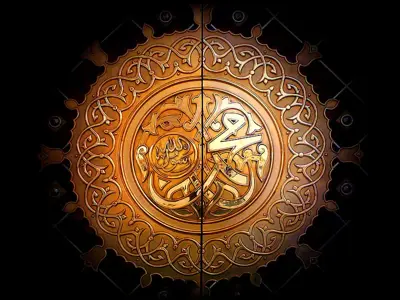
Muhammad was an Arab religious, social, and political leader and the founder of Islam. According to Islamic doctrine, he was a prophet, sent to preach and confirm the monotheistic teachings of Adam, Abraham, Moses, Jesus, and other prophets. He is believed to be the final prophet of God in all the main branches of Islam, though some modern denominations diverge from this belief. Muhammad united Arabia into a single Muslim polity, with the Quran as well as his teachings and practices forming the basis of Islamic religious belief.
