William Z. Foster Quotes
Developing fascism in the United States has a main foundation in the leadership of the AFL [American Federation of Labor].
To this day, historians debate whether Foster actually believed that statement or just used it as a ploy to discredit the AFL and other labor groups who the communists then considered their foes.
William Z. Foster, 1881-1961, Chairman, American Communist Party, Communist Candidate for President of the United States, 1929, Quoted in Irving Howe, The American Communist Party: A Critical History, 1957
Sourced by: Eigen's Political and Historical Quotations

Greece was bitterly divided between left and right. Morrow and others were very critical of policies, practices and corruption of both sides much to the chagrin of our State Department which was siding with the right out of fear of communism.

Some major celibrities like Charles Lindbergh were admirers of Hitler and other fascist leaders. There were even some American Fascist Organizations that overtly supported Hitler and Mussolini.
Leese was imprisoned several times for various crimes including helping members of the Nazi Waffen SS escape at the end of WWII. He had been a veterinarian in the British Army Camel Corps and an expert on camel health. As a lover of animals he was one of the early animal rights extremists and became a virulent anti-Semite because of his antipathy to the Kosher ritual slaughter of food animals.

This was the origin of the ultra right wing British Fascistic.


American Communist Party Newspaper. The communists were so supportive of the war effort that they were often unconditional defenders of the Roosevelt Administration’s war program. Most communists suspended their advocacy of labor strikes and Black enfranchisement during the war because it would ultimately lead to the weakening of the Allied efforts against the Nazis. Programs such as the “March on Washington Movement” were seen as untimely and therefore subversive and fascist. For more communist criticism of attempts during this period to further civil rights see {603312}

Ironically, the fascist organizations that did form in America did just that. The American Firsters claimed patriotism motivated them to support Hitler and Father Coughlin and his fascist movement was his own version of Christianity—one which the Roman Catholic Church was so opposed to that they prohibited him from appearing on the radio with his virulent preaching. He was one of several who “hijacked” American Christianity not unlike the way radical Muslims would later in the century hijack Islam.


See Huey Long for a similar point of view.


The “Blue Shirts” were so called because of the color of the shirts that the young fascist thugs of the Nationalists wore in China—a color later adopted by the communists for dress. European Fascists tended to have young thug “enforcement” type battalions which were named for the color of their shirts: “Brown Shirts” in Germany, “Black Shirts” of the Fascist movement in England. Ironically, the Red Scare after WWII, convinced American leaders to support Chiang (who called himself and his party the “nationalists”) who was a deep admirer of fascism himself. Chiang’s version of Fascism which combined European type Fascism with traditional Asian warlordism and corruption alienated the majority of the Chinese peasants. America was forced to choose between Chiang led corrupt Nationalist fascists, and Mao led communists. We chose Chiang, but Mau and the Communists won. Chiang’s forces then seized Taiwan and this was the only part of China that did not go communist. After Chiang’s death, the island mini-nation became less fascist and more democratic, and by the 1990’s became a full-fledged democracy.
The Christian Front was one of the network of Fascist organizations established and controlled by “radio priest” Charles E. Coughlin. In 1940 investigative reporter Lawrence Spivak did an expose of the Christian Front and The FBI raided its offices and confiscated many weapons intended for the assassination of people including a dozen members of Congress. See {588482}.


Fascists were variously described as “brown shirts” or “black shirts” at the time.

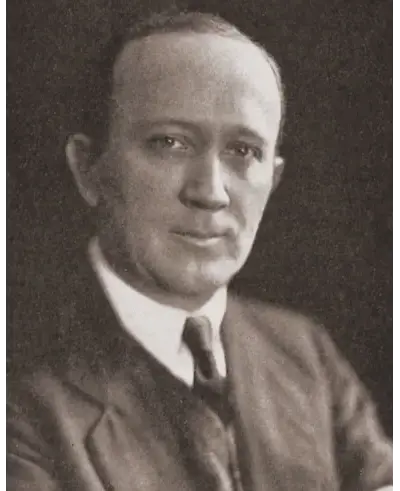
William Z. Foster was a radical American labor organizer and Communist politician, whose career included serving as General Secretary of the Communist Party USA from 1945 to 1957. He was previously a member of the Socialist Party of America and the Industrial Workers of the World, leading the drive to organize the packinghouse industry during World War I and the steel strike of 1919.
