Theodore Parker Quotes
Democracy is direct self-government, over all the people, for all the people, by all the people.
This is a very important quotation. Abraham Lincoln obtained a printed copy of Parker’s sermon and underlined this quotation on his copy. Later when he was President he used a slight variation of Parker’s last phrase in the last line of his famous Gettysburg Address.
Theodore Parker, 1810-1860, Clergyman & Abolitionist, Sermon delivered at Music Hall, Boston, July 4, 1858
Sourced by: Eigen's Political and Historical Quotations


This concept was utilized by the U. S. State Department in opposition to the 1992 dissolution of the Peruvian Congress by the President who claimed he was doing it for democratic reasons. See Al Smith for a later expression of this notion.


Some people think that this quotation was partially copied from Lincoln’s Gettysburg Address. However, he gave this speech more than a decade earlier. Lincoln might have been familiar with it. His statue is in the U. S. Capitol.


Slogan that Theodore Roosevelt developed to go with this attempt to nominate Presidents with Primary Elections. Prior to his 1912 run for the Presidency, presidential nominees were selected by the delegates to the party national convention. Since then the parties have used various combinations of delegates that were bound by primary election results in their state and other delegates who could use their judgment. No combination has been totally satisfactory and both major American political parties tinker with the combination every four years.


See 358821 for another expression of this idea.


The only soldier ever so honored. At the beginning of WWII, President Roosevelt and Churchill wanted the U. S. Army to invade German and Italian North Africa. Marshall, General Eisenhower, and all the other military men, advised that while it was possible, it would be a diversion from the strategic objective of invading Europe. None the less FDR ordered the invasion. The effect on the American people was wonderful, It showed that the Germans were not invincible, increased enlistment and morale at home, and developed more popular support for the war. Later, Marshall learned much about Democratic leadership and he, himself became a very effective government leader, and began to appreciate FDR’s approach but with a little cynicism about democracy.


Bartolo was the most famous legal expert of his day and for many years thereafter as he died at the age of 44—the height of his career. In Italy, Spain and other nations of Europe there were statutes passed that said if there was no precedent in Roman Law, the writings of Bartolo should dictate the law.


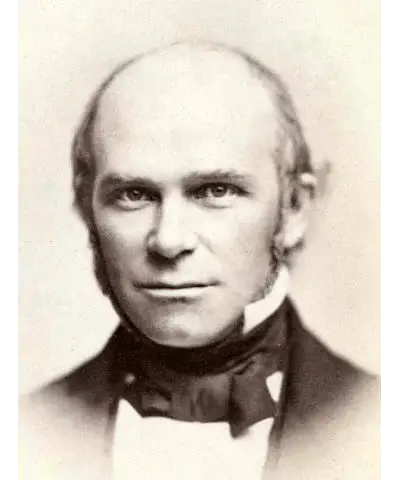
Theodore Parker was an American transcendentalist and reforming minister of the Unitarian church. A reformer and abolitionist, his words and popular quotations would later inspire speeches by Abraham Lincoln and Martin Luther King Jr.
