Goldwin Smith Quotes
Dante himself is open to the suspicion of partiality: it is said, not without apparent ground, that he puts into hell all the enemies of the political cause, which, in his eyes, was that of Italy and God.
Smith, Goldwin. Lectures on the Study of History, Delivered in Oxford, 1859-61. J. H. and Jas. Parker, 1861, p. 65.


As a slave holder himself, this was a dramatic statement. Slavery was immoral, God’s justice will not be on the white slave owners side, a slave revolt or other event could occur and change things radically. One great puzzlement of American history has been why Jefferson, who wrote so eloquently against slavery and predicted the disaster that would come. would himself keep his slaves and never free them as George Washington did. Some argue that he was so broke financially, that he could not afford to free them.


A massive earthquake struck Japan, destroying most of Tokyo and Yokohama. The deaths were so extensive that no official count was ever made. At the time, Japanese politics was polarized by two factions: One urged Japan to become democratic and modern like the West; the other, urged Japanese right wing militarism and expansionism. The shock of the Japanese population of such an enormous natural disaster, were seem by most Japanese as a punishment from God as Yasubumi and many other Japanese leaders stated. The reason for the punishment claimed by most was the recent adoption of Western ideas, lifestyles and particularly the trend away from traditional Japanese authoritarian government and toward Democracy. Japan then rejected democratic ideas and followed a militaristic, expansionistic, aggression leading directly to WWII.


During the American Revolution many patriot clerics argued against the monarchy by claiming that God has given Kings to the Ancient Jews—who had a type of Republic—as a punishment. Therefore monarchy is to be avoided.


This sura is interpreted by some Islamic fundamentalists as absolution for the killing of a non-Muslim by a Muslim. It was Allah who did it. In a greater sense, critics of Islam observe that many Muslims and Islamic nations have a double standard of responsibility for crimes. If the victims are Muslims, the normal standards of morality hold; but if a non-believer there can be no crime. Terrorism, torture, beheading, mass murder can all be done with a clean conscience if a Muslim takes this interpretation of this sura. Many Muslims however take an opposite point of view. These people do not have the concept of fatalism and lack of free will that others believe. There is a parallel to this problem in Judeo Christian countries although it is less common statistically. But the murder of physicians who perform abortions, and the Jewish radical fundamentalist who killed innocent Arabs at worship are examples of people who viewed themselves as instruments of God in their heinous activities.
Essentially such a rigid conviction of unbelievers was common with both Protestants and Catholics in the middle of the second millennium, but Christian theology evolved and forgiveness and repentance became major factors. Islam did not so modernize so even in the 21st century a disbeliever deserved nothing from Muslims because Allah would never forgive them and they would be consigned to hell. So this Sura and {584363} made fundamentalist Muslim terrorists particularly willing to kill non-believers.

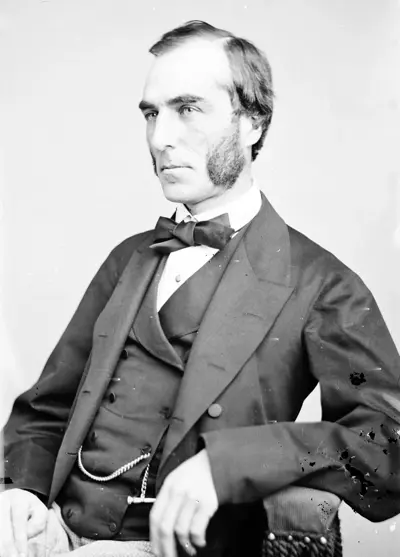
Goldwin Smith was a British historian and journalist, active in the United Kingdom and Canada. In the 1860s he also taught at Cornell University in the United States.
