Kenneth Burke Quotes
Creation implies authority in the sense of originator. The possibility of a 'Fall' is implied in a Covenant insofar as the idea of a Covenant implies the possibility of its being violated.
Burke, Kenneth. The Rhetoric of Religion: Studies in Logology. Beacon Press, 1961, p. 174.

This sura is interpreted by some Islamic fundamentalists as absolution for the killing of a non-Muslim by a Muslim. It was Allah who did it. In a greater sense, critics of Islam observe that many Muslims and Islamic nations have a double standard of responsibility for crimes. If the victims are Muslims, the normal standards of morality hold; but if a non-believer there can be no crime. Terrorism, torture, beheading, mass murder can all be done with a clean conscience if a Muslim takes this interpretation of this sura. Many Muslims however take an opposite point of view. These people do not have the concept of fatalism and lack of free will that others believe. There is a parallel to this problem in Judeo Christian countries although it is less common statistically. But the murder of physicians who perform abortions, and the Jewish radical fundamentalist who killed innocent Arabs at worship are examples of people who viewed themselves as instruments of God in their heinous activities.


Darwin who had a Protestant Christian upbringing, never precluded the possibility that God had created the universe with the Laws of Evolution and that was the mechanism He selected to allow all the species and diversity of life to develop. But he did not say that explicitly. While he found immediate acceptance and accolades from the scientific communities throughout the world, and enthusiastic approval by most educated people with the exception of theologians and clerics. Their reaction was extreme—almost apoplectic. The book as a best seller and they sold out with each successive printing. In the 6th edition, Darwin not only was explicit about the role the Deity might have had, but Darwin stated that he personally believed that He was the impetus to the creative process. Ironically, almost all the social and political opponents of Evolution have never read Darwin’s work (or much else on the subject) and certainly do not realize that the man they accuse of leaving God out of the Creation, actually believed that God was the critical element and he and other evolutionary scientists were just discovering God’s laws. Dr. Huxley and some other supporters of Darwin were disappointed with this change in the 6th edition, as they were atheists and believed that there was no deity involved in the creation. Today, there are evolutionary scientists who are on both sides of the issue. They just disagree on this point, but they work together on everything else.


By morally subjugating the existing laws, the scriptures, public opinion to the law of nature, Spinoza distressed many of the clerics and civil authorities of the day. Spinoiza's views were so threatenting to the established religious authorities that he was the only man in history to have been excommunicated by the Jews, the Catholics and the Muslims.
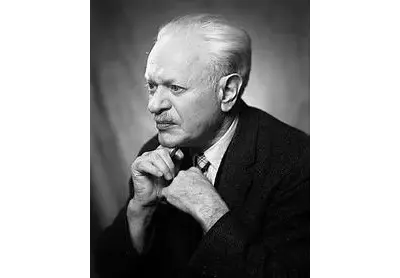
Kenneth Duva Burke was an American literary theorist, as well as poet, essayist, and novelist, who wrote on 20th-century philosophy, aesthetics, criticism, and rhetorical theory. As a literary theorist, Burke was best known for his analyses based on the nature of knowledge. Furthermore, he was one of the first individuals to stray away from more traditional rhetoric and view literature as "symbolic action."
