Sergei Lavrov Quotes
Conversations with my counterparts in Europe have made clear that many of them recognize NATO's limitations and understand the need for reform.
Lavrov, Sergei. "Russia and the U.S.: A new agenda." The Washington Post, 7 Apr. 2008.


One major problem at the time was that the Soviet Union was supporting and instigating revolutions in many parts of the world. When most nations of the UN wanted to provide peace keeping troops to quell the conflict, the Russians would veto and block the effort, Vandenberg wanted the UN to change the rules regarding the veto. The original right of veto for the major nations was originally included at the insistence of the United States and many Americans did not want to give it up or have any exceptions lest there be more. The Russians at that time also did not want to give up any of their veto powers. Another method that Vandenberg wanted to solve the Russian peacekeeping blockage problem was for America to engage in more collective security pacts so that action could be taken without UN Security Council unanimity by going around the UN.


In a NATO military operation, there is one NATO Supreme Commander but each nation has a minister for NATO. All significant decisions must be consented to be this group. But each of those is a representative of a different political government. Clark was masterful at this diplomatic side of the war just as Dwight Eisenhower was in WWII. Eisenhower had bigger egos to content with—Churchill, Roosevelt, Stalin, De Gaulle, but Clark had many more counties who could each veto actions.
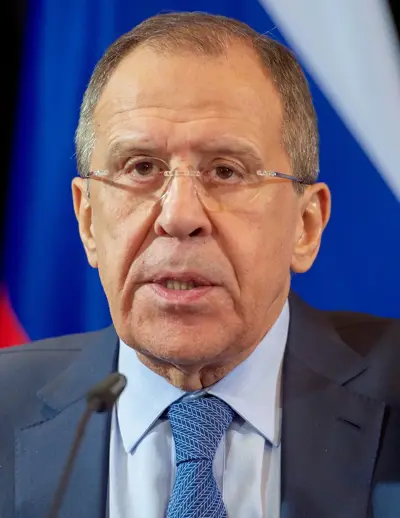
Sergey Viktorovich Lavrov is a Russian diplomat and politician who served as the Foreign Minister of Russia since 2004. As a member of the United Russia party, he was previously the Permanent Representative of Russia to the United Nations, serving in the role from 1994 to 2004.
