Lawrence Summers Quotes
Contagion has become very much a phenomenon, and it's a phenomenon of globalization.
Summers, Lawrence H. Interview. Frontline: The Crash, PBS, 1999.


The graphic is a painting of the effect of the plague in Ireland. Clearly his first sentence exaggerates, but there were some areas where most humans died. See {620882} for a Muslim Historian’s description of the plague.


He is in charge of collecting and deploying the funds donated for infectious diseases from countries throughout the world. Each nation has its own budget cycle and the public health officials have to plan and act as soon as they learn that an epidemic is breaking out. The viruses and bacteria grow when they grow, not when budgets have planned for them.


This is a historically significant quotation as it shows that Bassi, prior to Pasteur, discovered the germ theory of disease. Pasteur had a portrait of Bassi in his office.

The South has always been backward compared to the rest of the nation. By the 21st century the gap had gotten narrower. However, one of the reasons that Mrs. Roosevelt was unpopular with the Southern whites was not only that she was an outspoken critic of segregation and associated with Negroes, but she would publically point out the areas of Southern backwardness. However, the upper and middle class Southerners resented anyone—especially “outsiders” publicly exposing Southern weakness.

Virtually every spread of virus caused disease that has occurred in the late 20th century and onward was spread to different regions by people, who in an age of rapid travel, are what the public health scientists call “the vectors” — the carriers of the disease. In earlier times it was animals like rats who spread the disease.


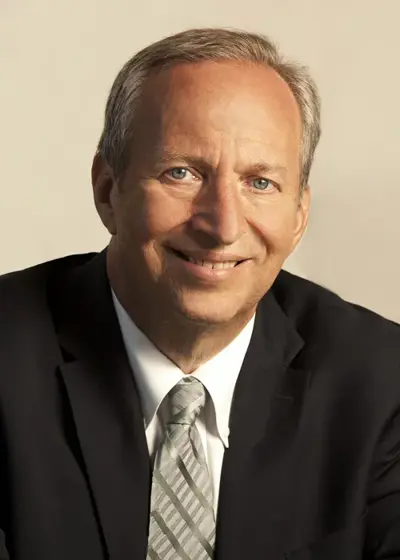
Lawrence Henry Summers is an American economist, former Vice President of Development Economics and Chief Economist of the World Bank (1991–93), senior U.S. Treasury Department official throughout President Clinton's administration (ultimately Treasury Secretary, 1999–2001), and former director of the National Economic Council for President Obama (2009–2010). He is a former president of Harvard University (2001–2006), where he is currently (as of March 2017) a professor and director of the Mossavar-Rahmani Center for Business and Government at Harvard's Kennedy School of Government.
